- Understand why montmorillonite clay is so damaging to foundations
- Know how the shrink-swell cycle creates progressive structural damage
- Explain the difference between Kansas City and Des Moines soil mechanics
- Identify which environmental factors accelerate foundation damage
Your foundation moves because the soil beneath it changes volume with moisture. Kansas City's montmorillonite clay swells when wet and contracts when dry, generating thousands of pounds per square foot of force. Des Moines' glacial till holds water against walls with persistent hydrostatic pressure. Both mechanisms are geological — not construction defects — and understanding them is the key to making informed repair decisions.
The soil beneath your home is not inert ground — it is a dynamic material that changes volume, exerts pressure, and shifts position with every change in moisture and temperature. In the Midwest, foundation damage is caused by the interaction between water, clay minerals, and seasonal weather patterns. Kansas City and Des Moines each sit on distinct soil formations that produce different types of foundation stress through different mechanisms. Understanding these mechanisms — not just their symptoms — is what separates informed homeowners from those who simply react to visible damage.
This page covers the soil science, structural mechanics, and environmental factors that move Midwest foundations. It is the technical reference behind the broader overview in the complete guide. The concepts here are referenced throughout the site — in symptom explanations, repair method descriptions, and local risk profiles. Every data point comes from USDA soil surveys, building code standards, or local climate records.
What Makes Clay Soil Dangerous to Foundations?
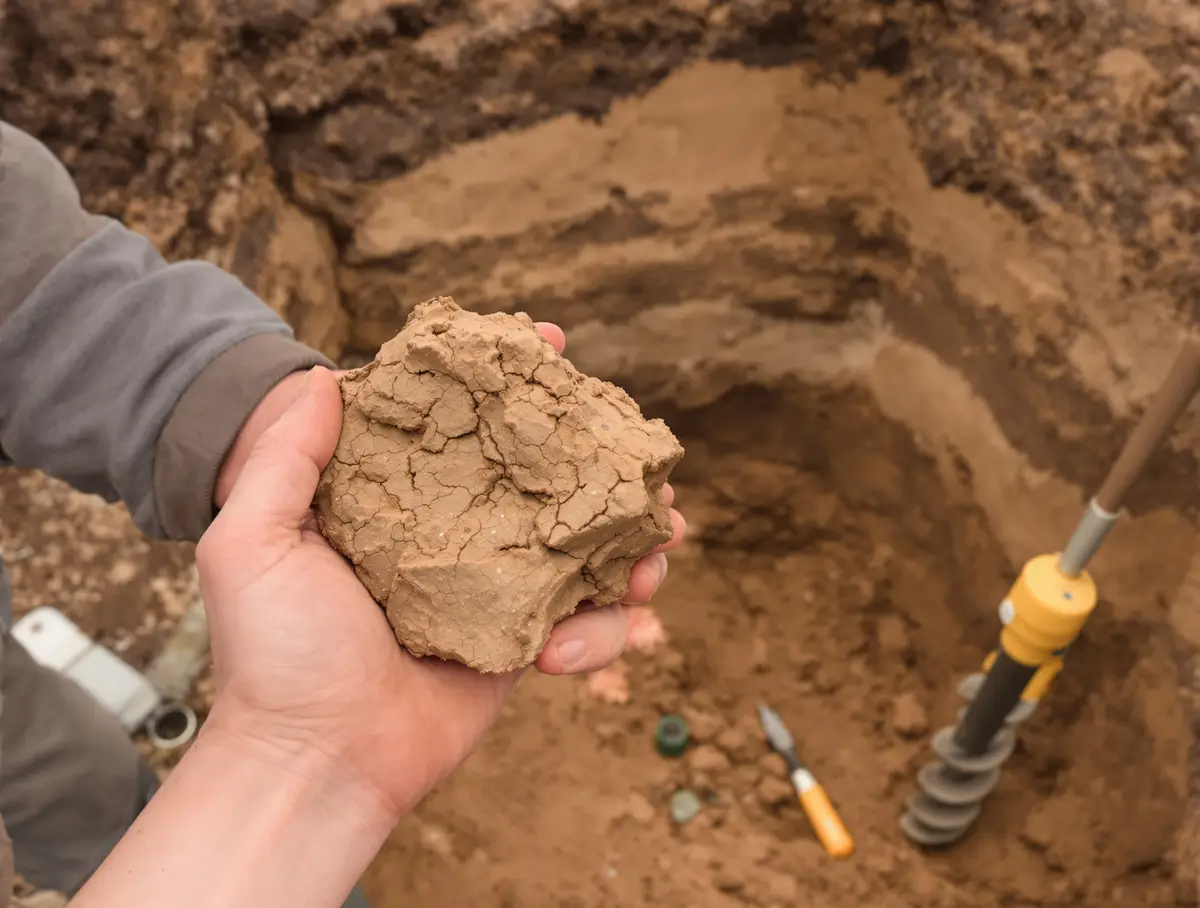
Clay soil damages foundations because it changes volume when its moisture content changes. Unlike sand or gravel, which maintain their volume regardless of water content, clay minerals absorb water into their crystalline structure and expand. When that water evaporates or drains, the clay contracts. This cycle of expansion and contraction generates forces measured in thousands of pounds per square foot — forces that exceed the design capacity of most residential foundations over time. The magnitude of volume change depends on the type of clay mineral, the percentage of clay in the soil, and how much the moisture content fluctuates.
Clay Mineralogy and Shrink-Swell Behavior
Not all clay is equally expansive — the mineral composition determines how much the soil will swell. The three primary clay minerals found in Midwest soils are kaolinite, illite, and montmorillonite (also called smectite). Kaolinite has a rigid crystal structure with minimal volume change. Illite expands moderately. Montmorillonite has a layered crystal structure that absorbs water between its molecular sheets, producing volume changes of up to 10 percent — by far the most aggressive clay mineral for foundation damage.
Kansas City's Wymore-Ladoga soil complex is dominated by montmorillonite clay. With 60 to 80 percent clay content and a USDA classification of "very high" shrink-swell potential, this soil is among the most expansive in the continental United States. The Hydrologic Soil Group D classification confirms that the soil has the lowest infiltration rate and highest runoff potential — water does not pass through it easily, so it either saturates the clay (causing expansion) or runs off (leaving the clay to dry and contract).
The soil plasticity index quantifies this behavior numerically. Plasticity index (PI) measures the range of moisture content over which a soil behaves as a plastic (moldable) material. A PI above 35 indicates high expansion potential. Kansas City's dominant clay soils test in the 40 to 60 PI range — well into the "very high" expansion category. By comparison, soils with a PI below 15 cause negligible foundation movement.
Which clay mineral causes the most severe foundation damage in Kansas City?
How Does the Shrink-Swell Cycle Damage Foundations?
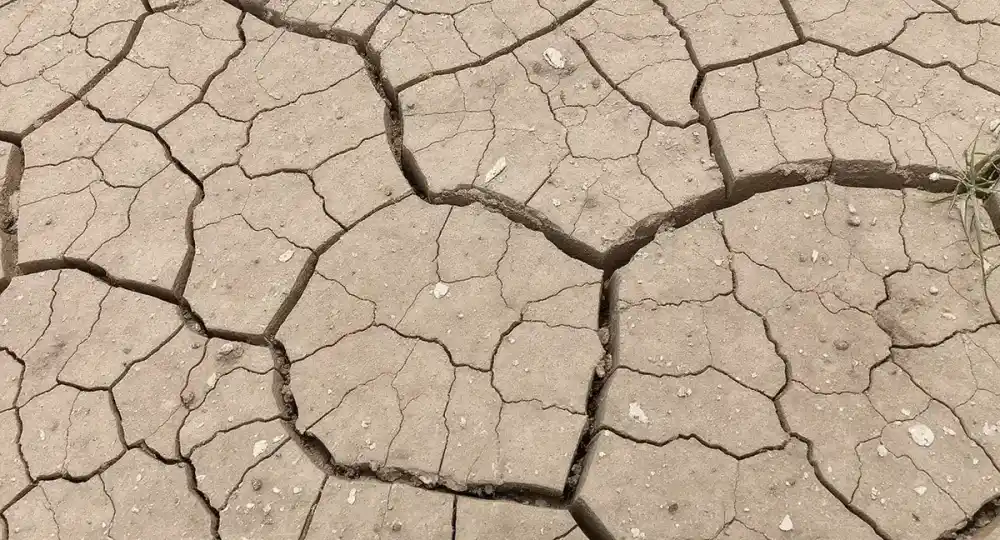
The shrink-swell cycle is the seasonal expansion and contraction of clay soil that generates lateral pressure against foundation walls and alternately supports and withdraws support from footings. In Kansas City, this cycle is driven by rainfall variation — from an average of 5.7 inches in May to 1.5 inches in January. When spring rains saturate the clay, it expands and pushes inward against basement walls while lifting footings from below. When summer drought dries the clay, it contracts and pulls away from foundations, creating voids beneath footings that allow settlement. This cycle repeats every year, and each repetition advances any existing structural damage.
The Active Zone
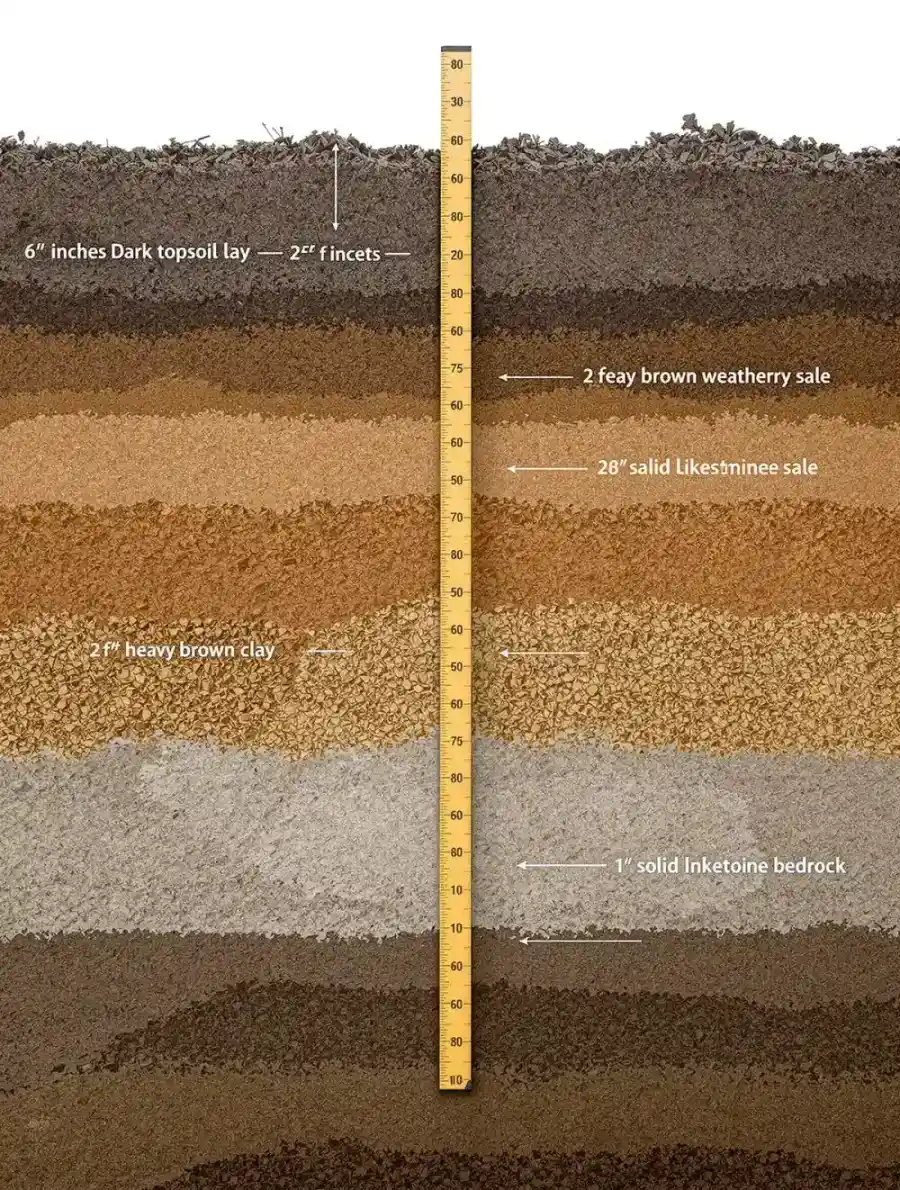
The active zone is the depth of soil that experiences significant moisture fluctuation with seasonal changes. In Kansas City, the active zone extends approximately 8 to 15 feet below the surface, depending on soil composition and vegetation. Within this zone, soil volume changes with each wet-dry cycle. Below the active zone, moisture content remains relatively constant and the soil provides stable bearing. This is why pier systems work — they transfer the foundation's load from the active zone, where soil is in constant motion, to stable strata below it.
Footings that sit within the active zone are directly exposed to volume changes. Most residential footings in Kansas City are placed at or just below the frost line — 36 inches deep. While this depth protects against frost heave, it places the footing near the top of the active zone, where moisture fluctuation is most intense. The footing rises with soil expansion and settles when the soil contracts, producing the progressive movement that accumulates into visible damage over years and decades.
Differential Settlement
Differential settlement occurs when one section of a foundation settles at a different rate than another, creating uneven stress across the structure. This is more damaging than uniform settlement because it introduces bending and shearing forces into walls and beams that were designed to resist vertical loads, not angular distortion. In Kansas City's clay soil, differential settlement is the most common cause of stair-step cracks in block and brick walls, diagonal cracks radiating from window corners, and measurable floor slope. Learn more about how differential settlement produces specific crack patterns in the crack types reference.
Differential settlement develops because moisture conditions vary around a building's perimeter. The south and west faces of a home receive more sun exposure, drying the soil faster and causing more contraction on those sides. Downspouts that discharge water near one corner create localized expansion. Mature trees extract moisture from one side but not another. These asymmetric moisture patterns cause different rates of soil movement under different parts of the same foundation — and the resulting differential movement is what cracks walls, slopes floors, and distorts frames.
What Is Hydrostatic Pressure and How Does It Affect Basement Walls?
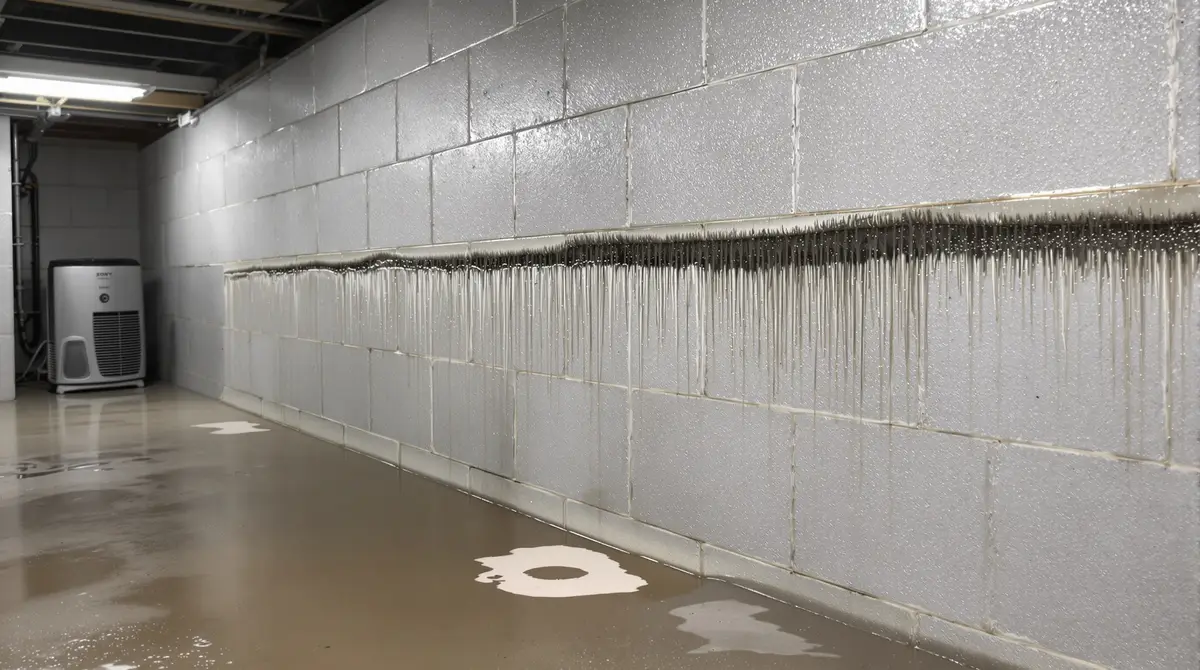
Hydrostatic pressure is the force exerted by water trapped in soil against a foundation wall. When the soil surrounding a basement is saturated, the weight of the water column creates lateral pressure that pushes inward against the wall. At a depth of 8 feet below grade, hydrostatic pressure reaches approximately 500 pounds per square foot — a force that accumulates across the entire surface area of a basement wall. In Des Moines, where glacial till traps water against basement walls year-round, hydrostatic pressure is the primary mechanism of foundation damage rather than the shrink-swell cycling that dominates in Kansas City.
Hydrostatic Pressure in Des Moines
Des Moines sits on the Des Moines Lobe — a glacial formation deposited 12,000 to 14,000 years ago during the Wisconsinan glaciation. The Dows Formation, the primary till deposit, is 45 to 60 feet thick and composed of clay-rich glacial material with low permeability. This material holds water against basement walls with persistent pressure, particularly during and after the spring snowmelt period. The Iowa State Capitol sits on the terminal moraine of this glacier — the farthest point the ice sheet reached — illustrating the depth and extent of the glacial deposits underlying the metro.
No pressure applied. The wall is plumb and structurally sound. This represents a wall with no lateral soil loading.
Deflection
0.0"
The key difference between Des Moines and Kansas City is persistence versus intensity. Kansas City's clay soil produces dramatic seasonal pressure spikes — high during spring saturation, low during summer drought. Des Moines' glacial till produces more moderate but persistent pressure. The soil doesn't swell as dramatically, but it never fully releases the water pressure either. The result is that Des Moines basement walls experience sustained inward loading rather than Kansas City's cyclical push-release pattern.
Lateral Earth Pressure
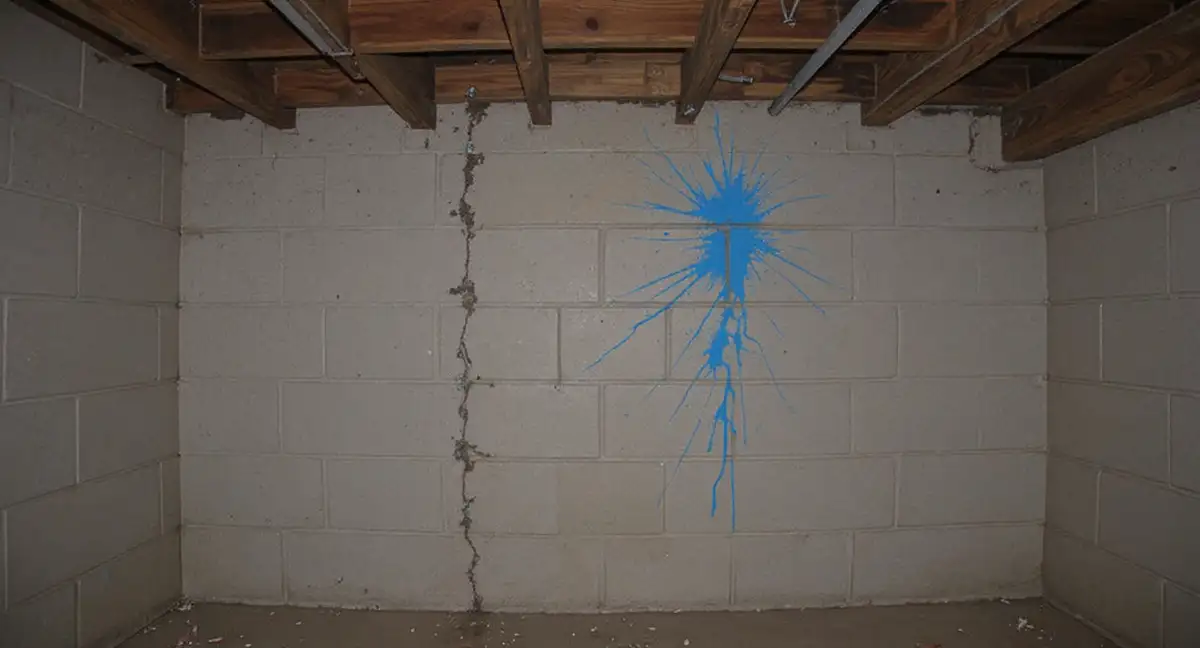
Lateral earth pressure combines soil weight, water pressure, and any surface loads into the total horizontal force against a basement wall. At-rest earth pressure from the weight of soil alone creates a baseline lateral load. Hydrostatic pressure from saturated soil adds water weight. Surcharge loads from driveways, patios, or vehicles parked near the foundation add further pressure. When the combined lateral force exceeds the wall's structural capacity, the wall deflects inward — first flexing, then cracking, and eventually failing if not stabilized. Wall failure progression and stabilization options are covered in the wall anchors and carbon fiber straps method pages.
- Hydrostatic pressure reaches ~500 psf at 8 feet depth in saturated soil
- Des Moines' glacial till creates persistent (not seasonal) wall pressure
- Kansas City has intensity spikes; Des Moines has sustained loading
- Combined lateral earth pressure from soil, water, and surface loads determines wall failure
How Do Freeze-Thaw Cycles Affect Midwest Foundations?
Water expands approximately 9 percent when it freezes, and in saturated clay soil, this expansion generates forces that lift footings, crack walls, and widen existing damage. The frost line — the depth to which the ground freezes in winter — determines how deep these forces reach. In Kansas City, the frost line is at 36 inches. In Des Moines, it reaches 42 inches — 6 inches deeper due to colder average winter temperatures (12°F average low in January versus 20°F in Kansas City). Building codes require foundation footings to be placed below the frost line to avoid frost heave, but not all older homes meet current standards.
Frost Heave
Frost heave occurs when freezing temperatures cause ice lenses to form in the soil, lifting the ground surface and anything resting on it. Ice lenses grow by drawing unfrozen water upward through capillary action in clay soil. The process is most aggressive in fine-grained soils like the clays in both Kansas City and Des Moines. A footing placed above the frost line can be lifted by frost heave in winter and then settle back (or further) as the ground thaws in spring — adding another cycle of movement to the shrink-swell damage already occurring.
Des Moines' deeper frost line creates greater freeze-thaw exposure for foundations. At 42 inches, freeze-thaw cycling reaches 6 inches deeper into the soil profile than in Kansas City. Combined with 26 inches of annual snowfall (versus 15 inches in KC), Des Moines foundations experience more freeze-thaw cycles per year at greater depth. Homes where original construction did not place footings at the full 42-inch code depth are particularly vulnerable to frost-related movement.
How Do Kansas City and Des Moines Foundation Conditions Compare?
Kansas City and Des Moines face foundation-damaging soil conditions through fundamentally different geological mechanisms, producing different symptom patterns that require different diagnostic approaches. Kansas City's aggressive montmorillonite clay creates dramatic seasonal volume changes — high expansion pressure in spring, deep contraction in summer — that primarily cause settlement, differential movement, and crack formation. Des Moines' glacial till creates persistent hydrostatic pressure and deeper freeze-thaw exposure that primarily cause wall bowing, moisture intrusion, and lateral wall failure.
Kansas City
Dominant soil: Wymore-Ladoga complex (montmorillonite clay), 60-80% clay content
Shrink-swell rating: Very high
Primary mechanism: Shrink-swell cycling
Frost depth: 36 inches
Climate: 42" annual rainfall (May peak: 5.7"), 15" snowfall, 20°F winter avg low
Peak risk: Late spring through early summer (May-June)
Primary symptoms: Settlement cracks, floor slope, differential movement
Counties: Jackson (MO), Johnson (KS), Clay (MO)
Des Moines
Dominant soil: Glacial till (Des Moines Lobe, Dows Formation), moderate clay with Cretaceous shale fragments
Shrink-swell rating: Moderate
Primary mechanism: Hydrostatic pressure
Frost depth: 42 inches
Climate: 36-39" annual rainfall (May-June peak: ~5"), 26" snowfall, 12°F winter avg low
Peak risk: Spring snowmelt (March-June)
Primary symptoms: Wall bowing, horizontal cracks, moisture intrusion
Counties: Polk, Dallas, Warren
| Factor | Kansas City | Des Moines |
|---|---|---|
| Dominant soil | Wymore-Ladoga complex (montmorillonite clay) | Glacial till (Des Moines Lobe, Dows Formation) |
| Clay content | 60–80% | Moderate (Cretaceous shale fragments) |
| Shrink-swell rating | Very high | Moderate |
| Hydrologic group | D (lowest infiltration) | D (lowest infiltration) |
| Primary mechanism | Shrink-swell cycling | Hydrostatic pressure |
| Frost depth | 36 inches | 42 inches |
| Annual rainfall | 42 inches (May peak: 5.7") | 36–39 inches (May–June peak: ~5") |
| Annual snowfall | 15 inches | 26 inches |
| Winter avg low | 20°F | 12°F |
| Peak risk period | Late spring–early summer (May–June) | Spring snowmelt (March–June) |
| Primary symptoms | Settlement cracks, floor slope, differential movement | Wall bowing, horizontal cracks, moisture intrusion |
| Counties (primary) | Jackson (MO), Johnson (KS), Clay (MO) | Polk, Dallas, Warren |
These differences matter for diagnosis and repair. A Kansas City home with stair-step cracks and floor slope is likely experiencing differential settlement from the shrink-swell cycle — a problem addressed by underpinning with piers. A Des Moines home with horizontal cracks and inward wall bow is likely experiencing hydrostatic pressure — a problem addressed by wall anchors or carbon fiber reinforcement. Applying the wrong repair to the wrong mechanism is the most common and expensive mistake in foundation repair. For suburb-level risk profiles that combine soil data with local housing analysis, see the Kansas City and Des Moines Atlas pages.
A Des Moines homeowner sees a horizontal crack running across their basement wall with slight inward bowing. What mechanism is most likely causing this?
What Environmental Factors Accelerate Foundation Damage?
Foundation damage is accelerated by anything that changes the moisture conditions around the foundation — plumbing leaks, poor drainage, tree roots, and climate patterns all contribute to the speed and severity of structural movement. The soil mechanics described above are the underlying cause, but environmental factors determine how fast the damage progresses and which parts of the foundation are affected first.
Drainage and Grading
Improper grading is the most correctable contributor to foundation damage. When the ground surface slopes toward the foundation rather than away from it, surface water collects against the foundation wall, saturating the surrounding clay. This creates localized expansion pressure on one side of the foundation while the opposite side may remain dry and contracted — the exact condition that produces differential settlement. Correcting grading to maintain a 6-inch slope over the first 10 feet from the foundation is the single most effective preventive measure a homeowner can take.
Tree Root Moisture Extraction
Mature trees extract significant moisture from the soil within their root zone, causing localized clay contraction and settlement near foundations. A single mature deciduous tree can transpire 50 to 100 gallons of water per day during peak growing season. In Kansas City's montmorillonite clay, this moisture extraction creates a contraction zone around the tree that can extend laterally as far as the tree's canopy. When this zone reaches the foundation, the soil beneath the footing shrinks and settles while adjacent soil (beyond the root zone) remains at normal moisture content — creating differential settlement concentrated on the side nearest the tree.
Plumbing Leaks
Underground plumbing leaks introduce water into the soil in concentrated, persistent streams that oversaturate the clay near the leak. A slow supply line leak beneath a slab or near a footing can saturate the clay on one side of a foundation for months or years before it's detected. The resulting expansion pressure creates asymmetric loading that pushes one section of the wall or footing while adjacent sections remain under normal conditions. In Kansas City, where the clay is highly responsive to moisture changes, even a small leak can produce measurable wall deflection within a single season.
Climate Trends
Increased rainfall intensity and drought severity in the Midwest amplify the shrink-swell cycle. Climate data from the past 30 years shows that the Kansas City metro is experiencing both wetter wet periods and drier dry periods — wider moisture swings that produce more aggressive volume changes in the clay. While individual weather years vary, the trend toward more extreme seasonal moisture variation means the forces acting on foundations are intensifying over time.
How Can You Tell If Your Soil Is Expansive Clay?
Homeowners don't need soil laboratory equipment to identify whether their yard's soil has the characteristics associated with foundation damage — several field observations and simple tests provide strong indicators.
Yard and surface indicators of expansive clay soil
Cracked ground during dry periods is the clearest visual indicator of expansive clay. When montmorillonite clay dries significantly — as it does in Kansas City during August-September drought — it contracts and pulls apart, leaving a network of surface cracks up to 1/4 inch wide and several inches deep visible in unshaded garden beds and lawn areas. These surface cracks may extend several feet in length. Their presence confirms the clay is cycling through significant volume change, which is the same mechanism acting on your foundation below.
Water pooling on the surface after rainfall — especially for hours or days after moderate rain — indicates Hydrologic Soil Group D classification, the category associated with Wymore-Ladoga and similar expansive clay soils. Group D soils have such low infiltration rates that water runs off or accumulates at the surface rather than absorbing. If your lawn or garden holds standing water for more than 24 hours after a 1-inch rain event, you are likely on Group D soil.
Soil color provides another indicator. Wymore-Ladoga clay is typically gray to grayish-brown when moist and develops a lighter, sometimes chalky appearance when dry. The characteristic desiccation crack pattern creates a polygonal network across the dried surface. Clay County's loess-modified soils appear more tan or buff in color and do not crack as dramatically.
Simple field tests any homeowner can do
The ribbon test identifies clay content without equipment. Take a moist (not wet) soil sample from 6 to 12 inches depth — below the topsoil layer. Roll it into a ball and then squeeze it between your thumb and index finger while pushing upward to form a ribbon. High-clay soils like Wymore-Ladoga form a smooth, continuous ribbon over 2 inches long before it breaks. Sandy soils fall apart before forming a ribbon. Medium-clay soils form a short ribbon under 2 inches. A ribbon over 2.5 inches long in a soil from the KC metro is consistent with the Wymore-Ladoga "very high" shrink-swell classification.
The plasticity test — the "feel" of moist soil rolled between palms — provides a quick qualitative read. High-plasticity clay (like Wymore-Ladoga) feels sticky and smooth, forms a long thin thread without crumbling at 1/8-inch diameter, and leaves a slight sheen on your hands. Low-plasticity soils feel gritty, crumble easily when rolled thin, and don't leave shine.
When field tests confirm what you suspect
Field observations that confirm high-clay soil don't mean your foundation is failing — they mean your foundation is operating in a high-risk soil environment. Most KC and Des Moines homeowners are already on expansive clay regardless of what they observe. The field tests are most useful for homeowners in edge-case areas (Clay County loess zones, alluvial bottomlands near rivers, eastern Overland Park loess pockets) where soil type is less certain. If field observations confirm expansive clay, the Clay Risk Score tool maps soil risk by location using USDA survey data for a more precise assessment.
How Does Your Home's Weight Interact with the Soil?
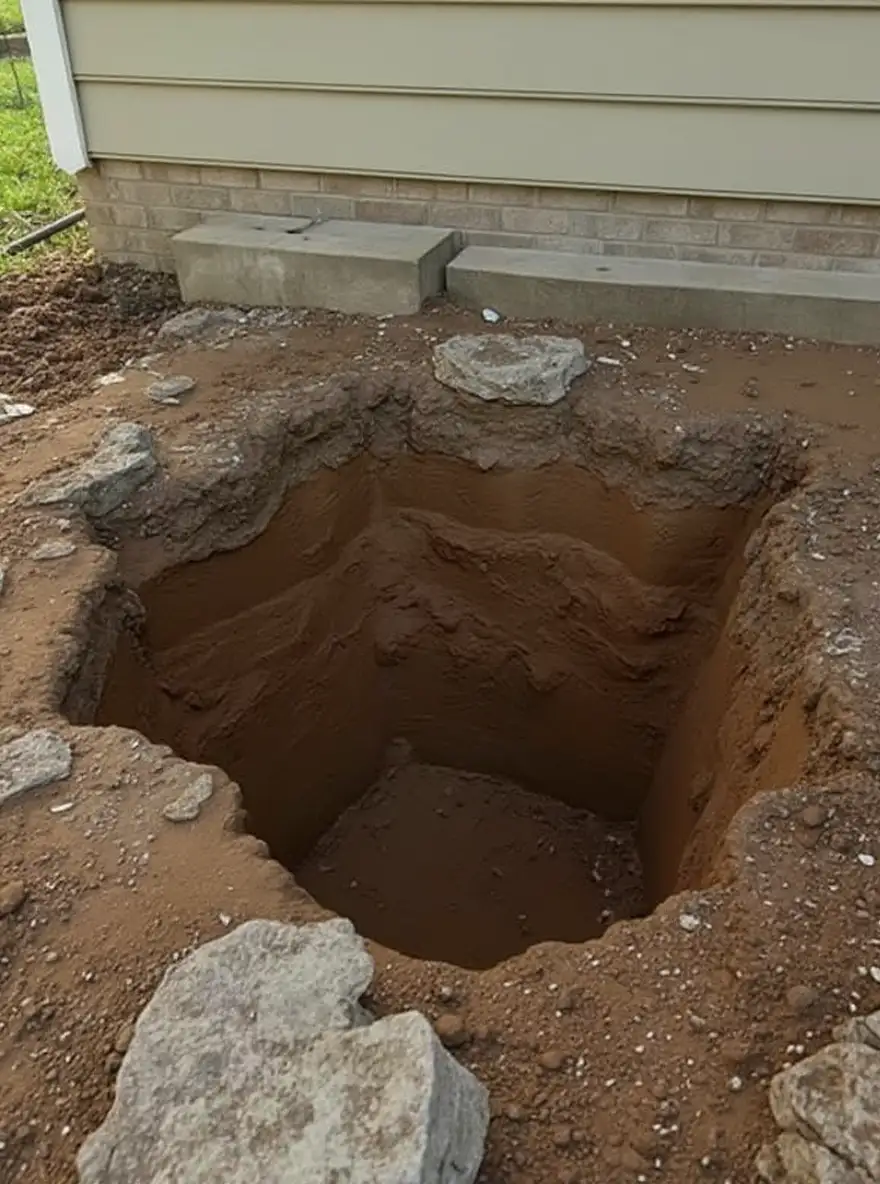
A residential foundation transfers the entire weight of your home — roof, walls, floors, and contents — through the footings into the soil. This load path runs from the roof through the wall studs (or masonry walls), into the sill plate, through the foundation wall, and into the footing. The footing spreads the concentrated wall load over a wider area of soil, reducing the pressure per square foot to a level the soil can support. The maximum pressure a soil can sustain without excessive settlement is called its bearing capacity, and it varies dramatically by soil type.
Clay soil bearing capacity changes with moisture content. Dry, compacted clay can have a bearing capacity of 2,000 to 4,000 pounds per square foot — adequate for residential loads. Saturated clay can lose half or more of its bearing capacity, dropping to 1,000 to 2,000 psf. When the bearing capacity drops below the actual load being applied by the footing, the soil compresses and the footing settles. This is why settlement accelerates during wet periods and why seasonal cycles progressively worsen the problem — each saturation event reduces bearing capacity momentarily, allowing incremental settlement that doesn't fully reverse when the soil dries.
Pier systems solve this problem by bypassing the active zone entirely. Push piers and helical piers transfer the foundation's load to soil or bedrock below the active zone, where moisture content remains stable and bearing capacity is consistent. This is why piering is a permanent solution — the piers reach soil that doesn't participate in the seasonal cycle. For details on how each pier type works, see the repair methods reference.