- Understand how push piers transfer load from failing soil to bedrock
- Know whether push piers are the right method for your foundation problem
- Follow the 7-step installation process
- Verify quality work using a professional checklist
A push pier is a series of steel tube segments hydraulically driven into the ground using the weight of your house as counterforce, until the tubes reach bedrock or soil dense enough to permanently support the foundation. The system works like a column of stacked steel pipes — each segment is pushed beneath the previous one until the bottom of the column hits something that will not move. A steel bracket bolted to your footing connects the pier column to your foundation, transferring the home's weight from failing surface soil to the stable bearing stratum below.
Push piers are the most widely installed residential foundation repair method in the Kansas City metro. The reason is geological: KC's limestone bedrock sits at 15 to 25 feet below grade — shallow enough for efficient pier driving — and the mid-century homes that make up 30.72% of the metro's housing stock have enough structural mass to provide the reaction force that push pier installation requires.
How Does a Push Pier System Work?
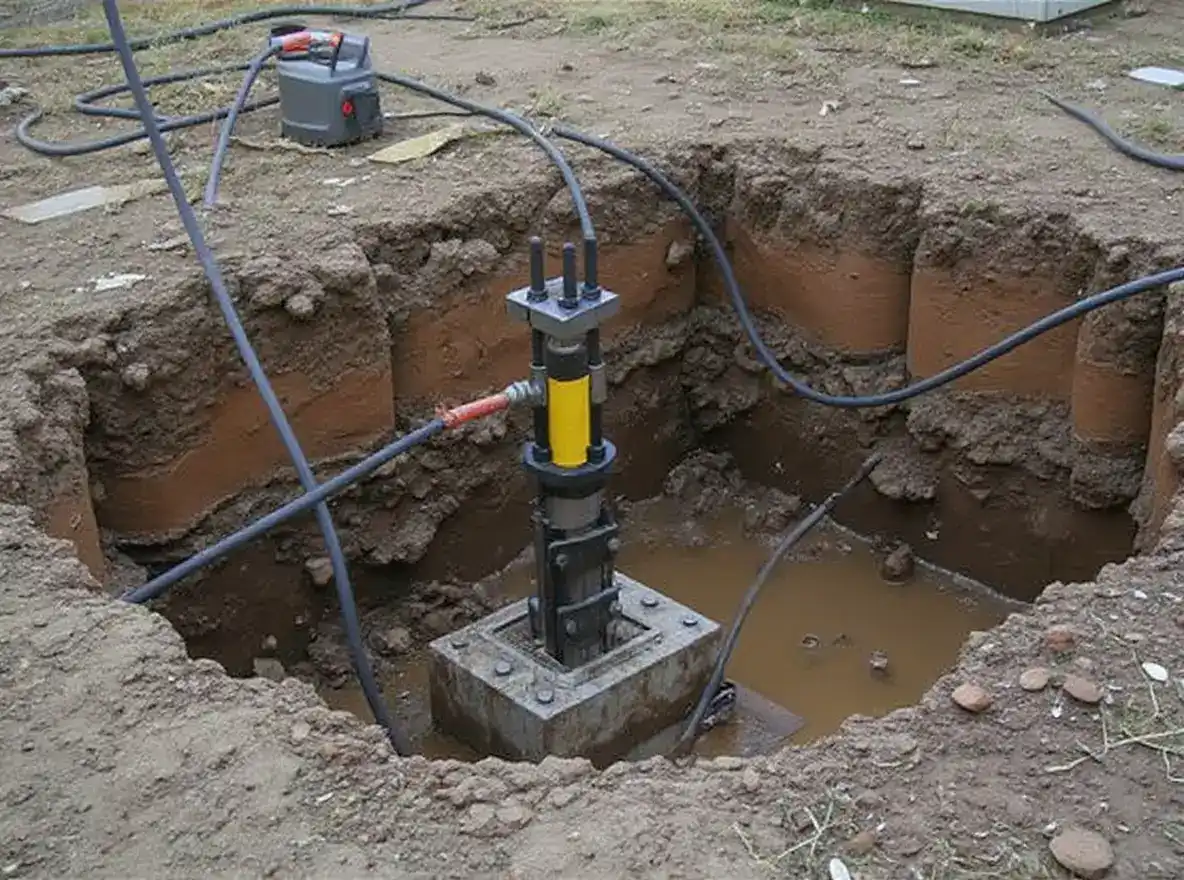
Push piers work by hydraulic resistance driving — a ram pushes steel tubes into the earth while the structure's own weight prevents the ram from pushing the house upward instead. The physics are straightforward: Newton's third law. The hydraulic cylinder exerts equal force in both directions. Downward force drives the tube into the ground. Upward force pushes against the bracket, which pushes against the footing, which pushes against the house.
Steel tube segmentation allows the pier to reach any practical depth. Each tube segment is typically 3 to 4 feet long and 2.875 or 3.5 inches in outer diameter, made from high-strength structural steel. Ten segments at 3 feet each would produce a 30-foot pier.
End-bearing capacity is what gives push piers their holding power. Unlike helical piers, which can derive capacity from friction along the shaft, push piers function almost entirely as end-bearing members. The flat-cut bottom of the lowest tube segment sits on the bearing surface — rock or hardpan — and the full structural load transmits straight down through the column.
The bracket-to-footing connection is the critical link between pier and structure. A forged or fabricated steel bracket clamps to the underside of the footing and provides the guide sleeve through which tubes are driven. After installation, the bracket becomes the permanent load path: structure weight flows from footing to bracket to pier column to bedrock.
The house itself is the installation equipment — push piers use the weight of the structure as counterforce to hydraulically drive steel tubes to bedrock, creating a load path that bears on rock 300 million years old.
What Foundation Problems Do Push Piers Solve?
Push piers solve settlement — the condition where soil beneath a foundation compresses, erodes, or consolidates, causing sections of the home to sink. Settlement produces stair-step cracks in masonry walls, diagonal cracks radiating from window corners, floors that slope toward the settling section, and doors or windows that bind in their frames.
Differential settlement — where one part of the foundation sinks more than another — is the most damaging pattern push piers address. Uniform settlement rarely causes structural distress because the geometry remains intact. Differential settlement introduces rotation, shear, and tension forces that concrete and masonry were not designed to resist.
Push piers can also stabilize foundations threatened by active erosion. Underground water flow, broken drain tiles, and failed downspout connections can wash bearing soil from beneath footings. Push piers bypass the erosion zone entirely, bearing on strata below the water's reach.
What Limitations Should You Know About?
Based on what you've read, would push piers be appropriate for a single-story home with a crawl space that has horizontal cracks and inward wall bowing?
Where Is Push Pier Underpinning Most Appropriate?
Push piers are the first choice for existing residential structures with adequate weight on sites where bedrock or dense bearing strata exist within reach. The ideal candidate is a home with a full basement, masonry or poured concrete walls, and a bearing stratum within 15 to 40 feet. That description fits the majority of homes in Kansas City's established neighborhoods.
Multi-story homes are especially well suited because they provide abundant reaction force. A two-story home with a full basement has three levels of structure bearing on its footings, driving piers efficiently and allowing wider spacing.
How Do Push Piers Perform in Kansas City and Des Moines?
Kansas City is one of the strongest regional markets for push pier installation in the Midwest, and the geology explains why. Limestone bedrock sits at 15 to 25 feet below grade — close enough for efficient driving, deep enough to be below the active clay zone. When the tube tip contacts limestone, driving pressure spikes dramatically, giving the installer an unmistakable bedrock termination signal.
Push Pier Performance by Metro
Kansas City
Shallow limestone bedrock allows efficient driving. Mid-century housing stock provides strong reaction force. Uniform clay profile means predictable pier depths.
Des Moines
Deeper bearing strata require longer pier runs. Glacial till contains cobbles that can cause false refusal. Variable resistance demands experienced installers.
For current pricing differences between KC and Des Moines push pier projects, see the cost and economics page. Material costs per pier are directly proportional to depth, making Des Moines installations more expensive per pier.
What Does Push Pier Installation Look Like?
Most residential push pier installations are completed in one to three days. A typical KC project — eight to twelve piers driven 15 to 25 feet to limestone — can often be finished in a single long day or two standard days. Des Moines projects requiring 40+ feet of depth per pier may extend to three days.
The 7-Step Installation Process
- 1
Excavation to footing
The crew digs access pits along the foundation wall at each pier location, exposing the bottom of the footing. Pits are roughly 3 feet wide and deep enough to clear the footing base.
- 2
Bracket attachment
A heavy steel bracket is bolted or pinned to the footing. The bracket includes a guide sleeve that aligns tube segments during driving and becomes the permanent load transfer connection.
- 3
Hydraulic resistance driving
A portable hydraulic ram pushes the first tube segment down using the home's weight as counterforce. Structure weight counterforce is what distinguishes push piers from every other piering method.
- 4
Steel tube segmentation
Each time a tube is driven flush with the bracket, the ram retracts, a new segment is placed, and driving continues. Segments interlock to maintain column alignment. Driving pressure is recorded at each segment.
- 5
Pier depth verification
Driving continues until the pier reaches refusal — the soil or bedrock at the tip resists further advancement at pressures exceeding the structure's weight. Final pressure must meet or exceed 150% of working load.
- 6
Synchronized structural lift
Hydraulic jacks on all pier brackets are pressurized simultaneously to raise the foundation. Lifting proceeds in controlled increments with laser level monitoring.
- 7
Lock-off, backfill, and documentation
Steel shims and set screws lock each bracket at final elevation. Soil is backfilled and compacted. The homeowner receives a per-pier installation report with depth, pressures, and elevation data.
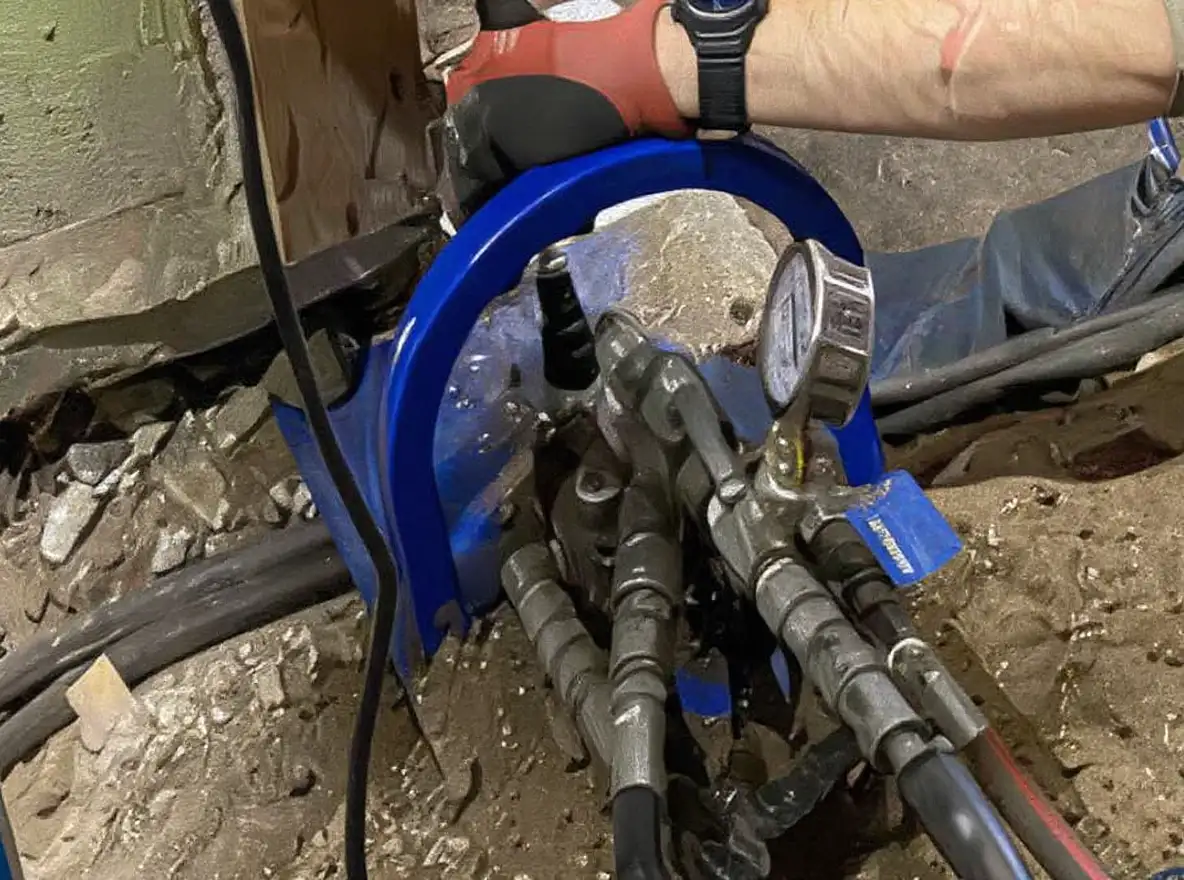
The equipment footprint is smaller than most homeowners expect. The hydraulic power unit sits in the yard or driveway, connected to rams by hoses. No concrete trucks, no pile drivers, no cranes. Most neighbors would not notice the work if they were not looking.
How Do You Know the Push Pier Work Was Done Right?
Every push pier produces a driving log that serves as built-in quality verification. Request this log from your contractor. Each pier entry should document: pier number, location, number of tube segments, driving pressure at each segment, and calculated bearing capacity.
How Long Does a Push Pier Installation Last?
Push piers installed to limestone bedrock or dense bearing strata have an indefinite structural service life — they do not degrade, compress, or lose capacity over time. The pier column is hot-dip galvanized structural steel; the bearing point is rock that has been geologically stable for 300 million years. Once the bracket is locked and the pier is bearing on limestone, the system's load-transfer function remains constant regardless of what happens to the soil above it.
The most vulnerable component of a push pier installation is the bracket-to-footing connection. High-strength bolts or pins seat the bracket against the footing face. If the concrete footing itself spalls or deteriorates over decades, the bracket connection can loosen. Inspecting the bracket connections every 10-15 years is a reasonable maintenance practice for older installations. Reputable contractors use corrosion-resistant bracket assemblies specified for the local soil chemistry — this is worth confirming before accepting any proposal.
Most reputable Kansas City and Des Moines foundation repair contractors offer 25-year to lifetime transferable warranties on push pier installations. A lifetime warranty that transfers to subsequent owners adds direct value to the property at sale. A warranty limited to the original homeowner or capped at 10 years provides substantially less protection — read the warranty document, not just the headline claim.
Frequently Asked Questions About Push Piers
- What is the best foundation repair method?
-
No single method is universally best — the right repair depends on the failure mode. Push piers are the most common choice for residential settlement where bedrock is accessible and the structure provides adequate weight. Helical piers serve lighter structures. Wall anchors and carbon fiber straps address lateral wall movement.
- What is the shrink-swell cycle and how does it damage foundations?
-
Clay-rich soils expand when wet and contract when dry. Kansas City's Wymore-Ladoga clay (60-80% clay content) can change volume by 10% or more between seasons. Each cycle ratchets the foundation slightly further out of position. Push piers bypass the active zone entirely by bearing on bedrock below it. See the foundation science page for detailed soil mechanics.
- Are older Kansas City homes more at risk for foundation problems?
-
Statistically, yes. Homes built between the 1940s and 1960s account for 30.72% of KC's housing stock and represent the largest share of push pier installations. Their masonry construction and full basements make them ideal push pier candidates due to sufficient structural weight.
- How much does foundation repair cost in Kansas City?
-
Push pier costs depend on the number of piers, depth to bearing, site access, and project scope. See the cost and economics page for current pricing data, per-pier ranges, typical project totals, and financing options.
- Do foundation problems get worse over time?
-
Yes — foundation settlement is progressive. Clay shrink-swell cycles add incremental displacement each year. Cracks widen, floors slope further, and structural damage compounds. Early intervention costs less and achieves better correction.