- Understand the difference between epoxy and polyurethane injection
- Know when crack injection is a complete repair vs. treating a symptom
- Follow the injection process
- Verify quality crack repair
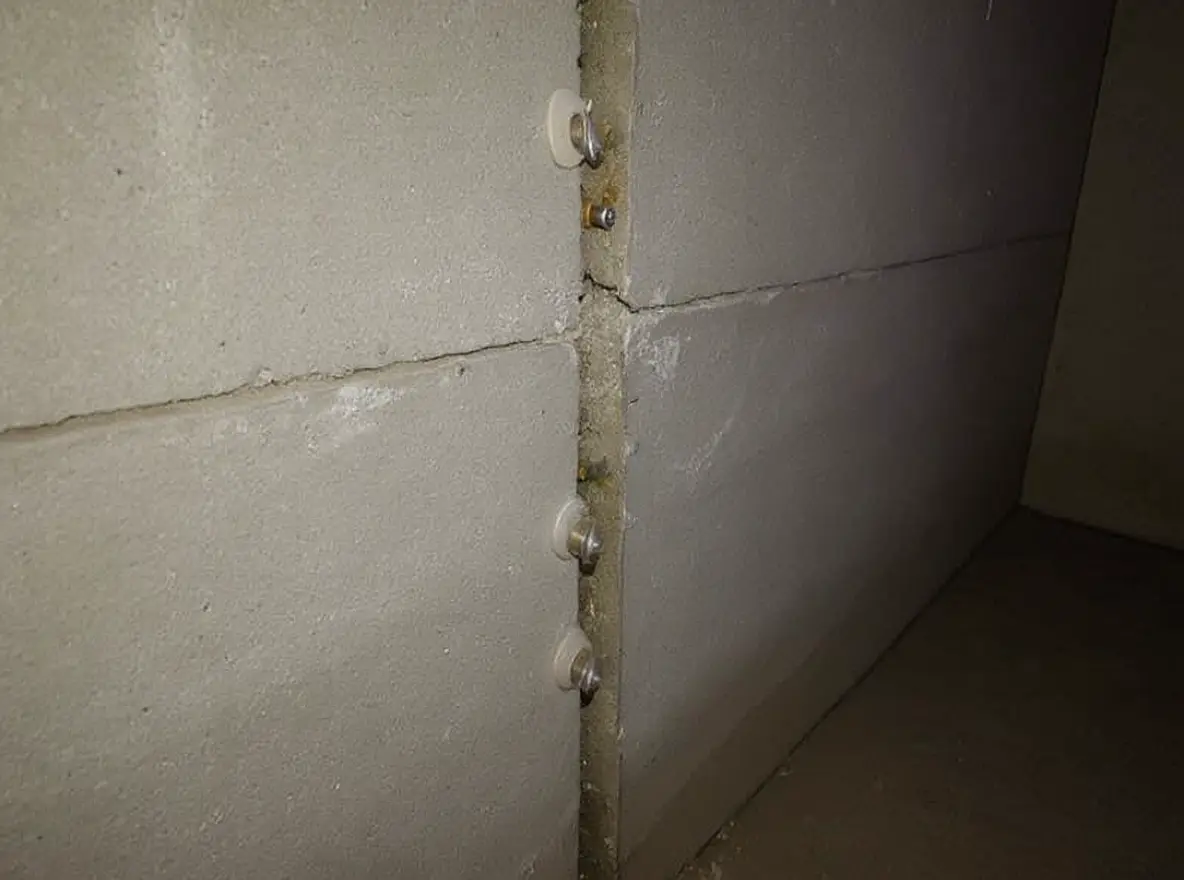
Crack injection fills foundation cracks from the inside out with either epoxy (for structural bonding) or polyurethane (for flexible waterproof sealing), restoring the wall to a continuous barrier against water, soil gas, and insects. It is the lowest-disruption foundation repair method — no excavation, no heavy equipment, and most injections are completed in a few hours. But crack injection has strict limitations: it only works on cracks in poured concrete walls, it only works when the crack is not caused by active structural movement that has not been addressed, and the material choice between epoxy and polyurethane determines whether the repair is structural or purely a seal.
This page explains how crack injection works, when each material is appropriate, what injection can and cannot fix, and how to evaluate the quality of an injection repair. If you are unsure whether your crack is structural or cosmetic, start with the crack types identification guide. For cost information, see the cost and economics page.
How Does Crack Injection Work?
Crack injection forces liquid repair material through the full depth of a foundation crack — from the interior wall face to the exterior soil face — using low-pressure injection equipment and strategically placed injection ports. The low-pressure injection method uses 20 to 40 PSI to push the material through the crack without creating additional stress on the concrete. Starting at the lowest port on a vertical crack (or one end of a horizontal crack), the technician fills each section until material flows from the adjacent port, confirming complete penetration.
The crack must be sealed on the surface between ports before injection begins, or the material will leak out the front of the crack instead of flowing through it. A fast-setting epoxy paste is applied over the visible crack line, creating a temporary dam that forces injected material to follow the crack path through the wall thickness. This surface port adhesion step is simple but critical — gaps in the surface seal allow material to escape before it reaches the exterior face of the crack.
Material viscosity selection determines how effectively the injection fills the crack. Thin, hairline cracks require low-viscosity materials that can flow into gaps as narrow as 0.002 inches. Wider cracks can accept higher-viscosity materials with greater gap-filling capability. Using material that is too thick for a tight crack results in incomplete fill; using material that is too thin for a wide crack results in material running through the crack and out the exterior face before it can cure.
Crack injection does not fix the structural movement that caused the crack — it only seals the symptom. If the underlying cause is not addressed, the same forces will either re-open the injected crack or create a new one nearby.
Should You Use Epoxy or Polyurethane?
Epoxy provides epoxy structural bonding — it welds the crack faces together and cures to a rigid material that is stronger than the concrete it joins. Cured structural epoxy has a compressive strength of 10,000+ PSI, compared to 3,000-4,000 PSI for typical residential foundation concrete. This makes epoxy the correct choice when the goal is to restore structural continuity across a crack. However, epoxy requires a dry crack surface for proper bonding and cures rigidly, meaning it will crack again if the wall experiences further movement at the same location.
Polyurethane provides a polyurethane flexible seal — it fills the crack, expands to ensure full contact with crack surfaces, and cures to a flexible material that can accommodate minor seasonal movement. Polyurethane does not restore structural strength. Its purpose is waterproofing: sealing the crack against water infiltration, soil gas entry, and insect access. Polyurethane's key advantage over epoxy is its ability to cure in wet conditions, making wet crack injection possible even in actively leaking cracks.
| Factor | Epoxy | Polyurethane |
|---|---|---|
| Primary purpose | Structural repair — restores load-carrying capacity across crack | Waterproof seal — stops water, gas, and insect entry |
| Cured flexibility | Rigid — will re-crack if wall moves | Flexible — tolerates minor seasonal movement |
| Wet crack use | No — requires dry surface for bond | Yes — cures in active water presence |
| Cured strength | 10,000+ PSI (stronger than concrete) | Low — not structural |
| Typical longevity | Life of structure (in stable cracks) | 5-10 years (may need reinjection in active areas) |
What Problems Does Crack Injection Fix?
Crack injection fixes water infiltration through poured concrete cracks, seals radon and soil gas entry pathways, and (with epoxy) restores structural continuity across non-active cracks. Most residential crack injection is performed to stop water leaking through basement wall cracks — a problem that is both a nuisance and a contributor to mold, efflorescence, and humidity-related damage to finished basement spaces. A properly injected crack is sealed through the full wall thickness, not just patched on the interior surface.
Epoxy injection can restore structural capacity in cracks caused by one-time events — initial concrete curing shrinkage, minor settlement that has stabilized, or impact damage. When a structural engineer confirms that the movement causing the crack has stopped, epoxy structural bonding creates a repair that is functionally as strong as (or stronger than) uncracked concrete. This is particularly relevant for cracks found during home inspections, where a documented structural repair can satisfy buyer concerns and lender requirements.
What Problems Does Crack Injection NOT Fix?
Crack injection does not fix the structural movement that caused the crack — it only seals the symptom. If a crack was caused by active settlement, lateral soil pressure, or hydrostatic loading that is ongoing, injection treats the crack but the same forces will either re-open the injected crack or create a new crack nearby. Injecting a crack caused by active wall bowing without also addressing the bowing (with wall anchors or carbon fiber straps) is a temporary measure at best.
Crack injection does not work on block walls, stone walls, or brick walls. These wall types crack through mortar joints and across irregular surfaces that injection ports and surface seals cannot effectively address. Cracks in masonry walls require tuckpointing, membrane waterproofing, or structural repair methods designed for discontinuous wall materials. Crack injection is specifically a poured-concrete-wall repair method.
It does not fix wide structural failures, shear cracks, or cracks with significant lateral displacement. Cracks wider than 1/4 inch with displacement across the crack face indicate structural movement beyond what injection addresses. These cracks require structural repair — piering, anchoring, or in severe cases wall replacement — before the crack itself is sealed.
When Is Crack Injection the Right Repair?
Crack injection is appropriate for poured concrete walls with cracks that are stable or caused by non-structural factors, where the goal is water control, gas sealing, or structural restoration of a non-active crack. The ideal candidate is a vertical or diagonal crack in a poured concrete basement wall that is hairline to 1/4 inch wide, shows no lateral displacement across the crack faces, and has been stable through at least one full seasonal cycle (or was caused by identifiable one-time shrinkage during curing).
Polyurethane injection is appropriate when the crack is actively leaking, when minor seasonal movement is expected, or when the crack is in an area that cannot be dried for epoxy application. Epoxy injection is appropriate when structural restoration is the goal, the crack is dry, and the underlying cause of the crack has been resolved or determined to be non-progressive. Choosing between the two is a material viscosity selection decision that should be based on the crack's characteristics, not on which material the contractor happens to have on the truck.
How Do Kansas City and Des Moines Conditions Affect Crack Injection Decisions?
In Kansas City, where seasonal shrink-swell cycling creates recurring stress on crack repairs, polyurethane's flexibility makes it a better choice for cracks in areas of ongoing minor movement. The Wymore-Ladoga clay's annual expansion-contraction cycle puts seasonal stress on every rigid bond in a foundation wall — including epoxy-injected cracks. A rigid epoxy repair in a KC foundation that experiences measurable seasonal movement may crack adjacent to the repair within a few years, while a flexible polyurethane seal in the same crack can absorb that movement without failing.
In Des Moines, where hydrostatic pressure drives water through poured concrete cracks, polyurethane's ability to cure in wet conditions is particularly valuable. Many Des Moines basement cracks are actively leaking at the time of repair — water seeping or flowing through the crack from hydrostatic pressure in the glacial till outside the wall. Epoxy requires a dry crack surface for proper bonding; attempting to inject epoxy into an actively leaking crack results in poor adhesion and premature failure. Polyurethane reacts with the water and uses it as part of its curing chemistry, forming an effective seal even in actively flowing conditions.
Both markets see crack injection as a first-line repair for poured concrete homes built after 1960, when poured-in-place concrete walls became the dominant residential foundation type. Older KC homes with block or stone foundations are not candidates for injection — those wall types require different repair approaches as described on the repair methods index page.
Crack Injection Considerations: Kansas City vs. Des Moines
Kansas City
Seasonal shrink-swell cycling from Wymore-Ladoga clay puts recurring stress on rigid epoxy repairs. Polyurethane's flexibility makes it the better choice for cracks in areas of ongoing minor seasonal movement.
Des Moines
Hydrostatic pressure from glacial till drives water through poured concrete cracks. Many cracks are actively leaking at repair time, making polyurethane's ability to cure in wet conditions particularly valuable.
What Are the Steps in a Crack Injection Repair?
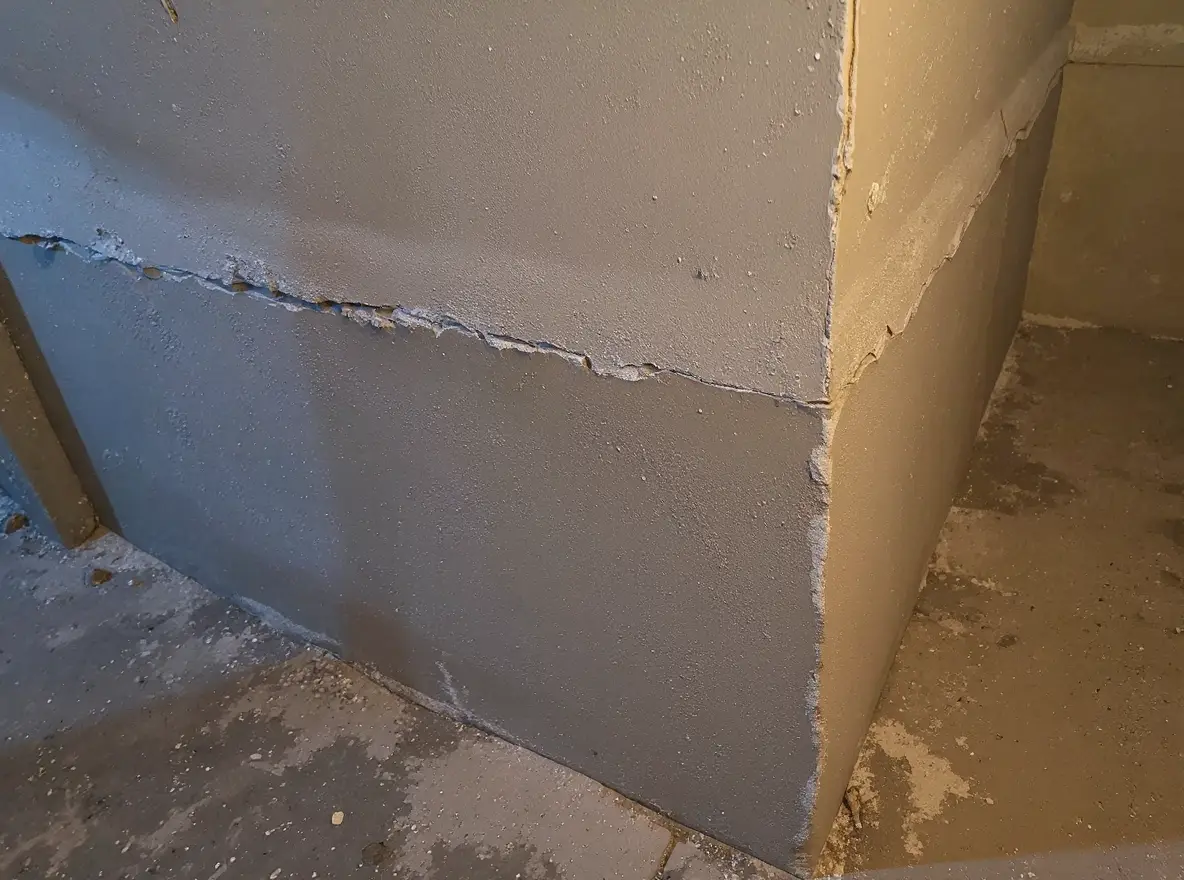
Crack injection follows a six-step process that takes 2 to 4 hours for a typical single-crack repair — but the preparation steps determine whether the injection will hold for years or fail within months. Rushing crack chase preparation or port installation to save 30 minutes of labor leads to incomplete fills and premature seal failure.
- Step 1: Crack Assessment and Material Selection. The technician evaluates the crack's width, depth, moisture condition, and probable cause. Stable dry cracks with structural significance get epoxy. Wet cracks, leaking cracks, or cracks in areas of minor seasonal movement get polyurethane. The assessment also determines whether injection is appropriate at all — structural cracks caused by active movement need structural repair before injection.
- Step 2: Crack Chase Preparation. The crack surface is cleaned of paint, efflorescence, dirt, and loose concrete. If the crack opening is too tight for port adhesion, a grinder is used to chase (widen) the surface opening slightly. This crack chase preparation step ensures that both the injection ports and the surface seal paste bond cleanly to sound concrete rather than contaminated or weak surface material.
- Step 3: Injection Port Installation. Plastic injection ports with flanged bases are adhered directly over the crack at regular intervals. Standard injection port spacing is 6 to 8 inches for cracks wider than 1/16 inch, and 4 to 6 inches for tighter hairline cracks where material flow resistance is higher. Ports are the only entry points for injection material — their spacing determines how completely the crack is filled.
- Step 4: Surface Sealing. The exposed crack between ports is sealed with a fast-setting epoxy paste. This seal prevents injection material from weeping out the crack face during injection, directing all material flow through the crack depth. The paste must cover the crack completely and bond tightly to the concrete — any gap becomes a leak point that prevents full-depth penetration.
- Step 5: Low-Pressure Injection. Starting at the lowest port (for vertical cracks) or one end (for horizontal cracks), the technician injects material at 20 to 40 PSI until it flows from the next port. This bottom-up, port-to-port progression confirms that each section of the crack is filled before moving on. The low-pressure injection method avoids overpressurizing the crack, which could widen it or create new fractures in the concrete.
- Step 6: Curing and Cleanup. The injected material cures in place — epoxy to full structural strength in 24 to 72 hours, polyurethane to seal within minutes to hours. After full cure, the surface seal paste is removed by chipping or grinding flush with the wall surface. Port bases are ground flush or removed. The finished repair leaves a wall surface that can be painted or covered with no protruding hardware.
Crack Injection Process at a Glance
- 1
Crack Assessment and Material Selection
The crack is evaluated for width, depth, activity level, and moisture presence. This determines whether epoxy (structural, dry cracks) or polyurethane (wet cracks, minor movement) is used.
- 2
Crack Chase Preparation
The crack surface is cleaned and, if necessary, chased with a grinder to create a uniform channel. Removes loose concrete, paint, and debris for proper bonding.
- 3
Injection Port Installation
Plastic injection ports are adhered to the crack face at 6-to-8-inch intervals. Ports provide the entry points through which injection material is pumped.
- 4
Surface Sealing
Fast-setting epoxy paste is applied between ports to prevent resin from leaking out during injection, forcing material through the full crack depth.
- 5
Low-Pressure Injection
Starting at the lowest port, material is injected at 20-40 PSI until it flows from the next port above, confirming each section is filled.
- 6
Curing and Cleanup
Epoxy cures to full strength in 24-72 hours; polyurethane cures within minutes to hours. Surface seal paste and port bases are removed or ground flush.
How Do You Know If a Crack Injection Was Done Properly?
The primary quality indicator for crack injection is full-depth penetration — the material must fill the crack from the interior wall face all the way through to the exterior face. A surface-only repair that fills the visible portion of the crack but leaves the interior void unfilled will leak again as soon as water pressure finds the incomplete seal. Full-depth fill is confirmed during injection by material flow between consecutive ports and, ideally, by material appearing at the exterior face of the crack.
Port-to-port flow during injection is the real-time quality verification. When the technician injects at one port and material flows from the next port above, it confirms that the crack section between those two ports is filled. If a port does not produce overflow, it means there is either a blockage in the crack, a void the material is filling (requiring additional volume), or the crack does not connect between those ports — all conditions that require adjustment rather than simply moving on.
- Port spacing documentation: Ports installed at 6-to-8-inch intervals indicate thorough coverage. Ports spaced 12+ inches apart suggest the contractor is minimizing material use at the expense of complete fill.
- Material certification: The contractor should use commercially manufactured injection resins with published technical data sheets, not generic or unmarked materials. Product identification allows independent verification of material properties.
- Warranty specifics: A meaningful crack injection warranty covers the injected crack against leaking through the repair for a defined period. Warranties that only cover "workmanship" but not water penetration are functionally meaningless for a waterproofing repair.
- Before-and-after photos: Photos showing the crack before preparation, after port installation, during injection, and after cleanup document the repair process and serve as a reference if future evaluation is needed.
How Long Does Crack Injection Last?
Epoxy crack injection performed on a stable, non-active crack creates a bond that is stronger in tensile strength than the surrounding concrete — the crack location becomes the hardest point in the wall. On cracks that have stopped growing because the underlying settlement has reached equilibrium, a properly executed epoxy injection is a one-time permanent repair. The injected section will not re-open at the same location unless new structural forces act on the wall.
Polyurethane injection longevity is tied to whether the crack continues cycling with seasons. Unlike rigid epoxy, polyurethane cures as a flexible, compressible foam that accommodates minor movement. A crack that widens slightly in summer and narrows slightly in winter — due to temperature-driven concrete expansion — can be successfully sealed with polyurethane indefinitely, because the foam accommodates the cycling. However, polyurethane injection in an actively growing crack from ongoing settlement will need retreatment as the crack continues to widen past the injected zone.
Warranties on crack injection are typically limited — often 1 to 3 years — because the longevity depends on whether the crack is truly stable or actively growing. A reputable contractor will not warranty crack injection on an actively widening crack; doing so would require retreatment every season. If monitoring confirms the crack is stable through a full annual cycle, the injection has a high probability of lasting indefinitely. For cost context on crack injection versus structural repair, see the cost and economics page.
Frequently Asked Questions About Crack Injection
- How do I know if a crack in my foundation is serious?
- Crack width is the primary severity indicator. Hairline cracks under 1/16 inch are typically cosmetic. Cracks between 1/16 and 1/4 inch warrant monitoring. Cracks wider than 1/4 inch, any horizontal crack in a basement wall, or any crack with visible displacement across the crack face indicates active structural movement and requires professional evaluation before considering injection.
- What is the shrink-swell cycle and how does it damage foundations?
- The shrink-swell cycle occurs when clay soil absorbs water and expands, then dries and contracts. This repeated volume change exerts lateral pressure on foundation walls during wet periods and withdraws soil support during dry periods. In Kansas City, seasonal rainfall variation — from 5.7 inches in May to 1.5 inches in January — drives this cycle annually, creating stress on crack repairs and foundations alike.
- What time of year is worst for foundation problems in Kansas City?
- Late summer through early fall (August to October) is when the most foundation damage becomes visible in Kansas City. The prolonged summer dry period causes the Wymore-Ladoga clay to shrink significantly, withdrawing support from footings and creating gaps between soil and basement walls. When fall rains arrive, the re-expanding soil pushes against walls that may have shifted during the dry period, worsening displacement and opening new cracks.
- Does Des Moines have clay soil that damages foundations?
- Des Moines sits on glacial till — a dense, mixed-grain soil deposited by glaciers — that contains significant clay content. While it behaves differently from Kansas City's pure expansive clay, the till's low permeability creates persistent hydrostatic pressure against basement walls and limits drainage around foundations. This sustained water pressure drives foundation cracks and wall bowing, particularly in older block-wall construction.
- How long does foundation repair last?
- Crack injection longevity depends on the material used, the cause of the crack, and whether the underlying movement has stopped. Epoxy structural bonding in a stable crack can last the life of the structure — the cured epoxy is stronger than the surrounding concrete. Polyurethane seals in areas of minor ongoing movement typically last 5 to 10 years before reinjection may be needed. If the crack is caused by active structural movement that has not been addressed, any injection will eventually fail.
A poured concrete basement wall has a vertical crack that has been stable at 1/8 inch width for 3 years. Water seeps through during heavy rain. What injection material is most appropriate?