Foundation Repair Methods: How Each System Works
Every foundation repair method exists to solve a specific structural problem — the right method depends on what is failing and why.
- Identify which repair method matches your foundation problem
- Understand the difference between settlement repair, wall stabilization, and slab lifting
- Know what questions to ask a contractor about their recommended method
Which Repair Method Do You Need?
Start with the problem, not the method. A contractor who recommends a specific product before diagnosing the failure mode is selling equipment, not solving your problem. The diagnostic sequence is: identify the symptom → determine the failure mode → match the failure mode to the correct repair method. The table below maps common foundation problems to the methods that address them.
| What You Are Seeing | Failure Mode | Appropriate Method(s) | Severity |
|---|---|---|---|
| Stair-step cracks, diagonal cracks, sloping floors | Differential settlement — soil beneath footing is compressing or washing away | Push piers or helical piers | Moderate–High |
| Horizontal cracks, wall bowing inward | Lateral earth pressure — soil outside wall is pushing inward | Wall anchors or carbon fiber straps | High — act promptly |
| Sinking garage floor, settled sidewalk, uneven patio | Slab settlement — fill soil beneath slab has compacted or eroded | Polyjacking | Moderate |
| Sinking interior basement or slab-on-grade floor | Interior slab settlement — bearing soil beneath interior slab has failed | Slab piers | Moderate–High |
| Vertical cracks with water seepage | Non-structural cracking — concrete shrinkage or minor settlement with water entry | Crack injection (epoxy or polyurethane) | Low–Moderate |
| Wall displaced beyond 4 inches, crumbling block, severely deteriorated concrete | Structural wall failure — wall material has failed beyond stabilization | Foundation wall replacement | Critical |
How Do Pier Systems Stop Foundation Settlement?
Pier systems transfer your home's weight from unstable surface soil to stable bearing strata below — bypassing the problem soil entirely. In Kansas City, that typically means driving steel through the Wymore-Ladoga clay layer (60-80% clay, rated "very high" for shrink-swell potential) until reaching limestone bedrock at 15 to 25 feet. In Des Moines, piers may need to reach through 45 to 60 feet of glacial till to find consistent bearing resistance. The pier becomes a permanent structural column connecting your foundation to ground that does not move.
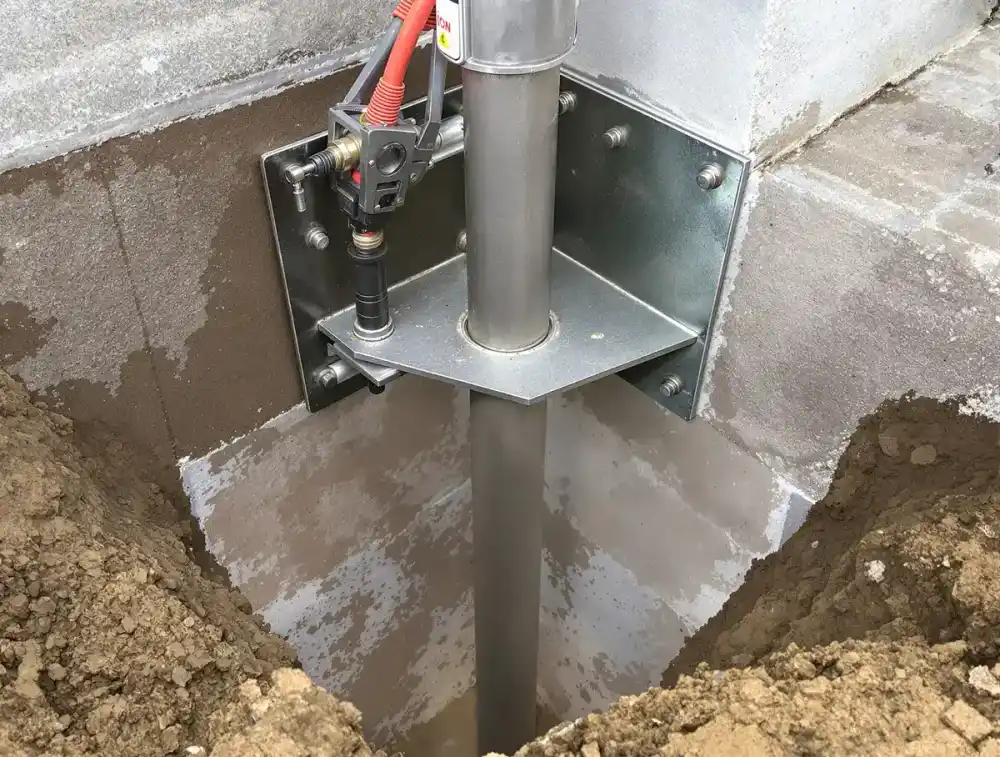
Push Piers
Hydraulically driven using your home's weight as resistance. Steel tubes pushed section-by-section through soil to bedrock or stable strata. The most common residential piering method in KC. Best for existing structures with sufficient weight to drive the pier.
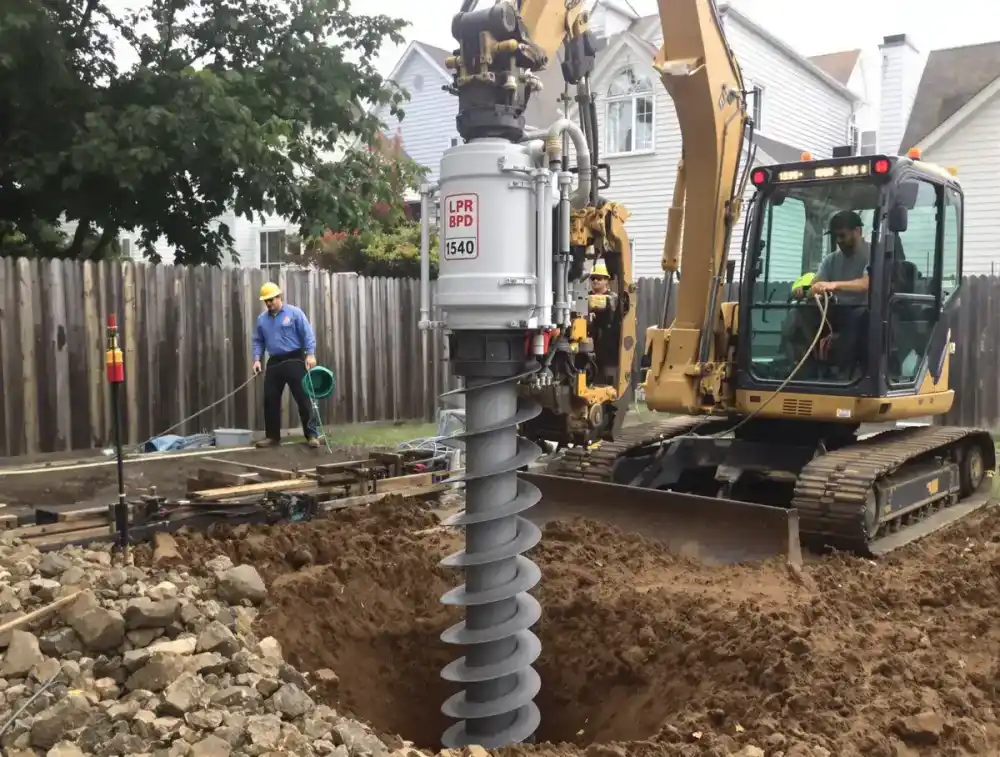
Helical Piers
Screwed into the ground with torque-monitored hydraulic equipment. Steel shaft with helix plates rotated into bearing soil. Used when the structure is too light for push piers, for new construction, or when access constraints prevent push pier equipment.
Slab Piers
Interior piers installed through the concrete slab. Access holes cored through the slab, pier driven to stable soil, slab lifted and concrete patched. Used for settling basement floors, slab-on-grade foundations, and interior bearing walls on slabs.
Not sure which pier type fits your situation? Read the helical vs. push pier comparison for a detailed side-by-side analysis.
How Do You Stop a Basement Wall from Bowing Inward?
Wall stabilization methods counteract the lateral earth pressure that pushes basement walls inward. In Des Moines, where persistent hydrostatic pressure from glacial till is the primary mechanism, wall stabilization is the most common repair category. In Kansas City, seasonal shrink-swell cycling produces intermittent lateral pressure that accumulates wall displacement over years. The severity of wall displacement determines which stabilization method is appropriate.
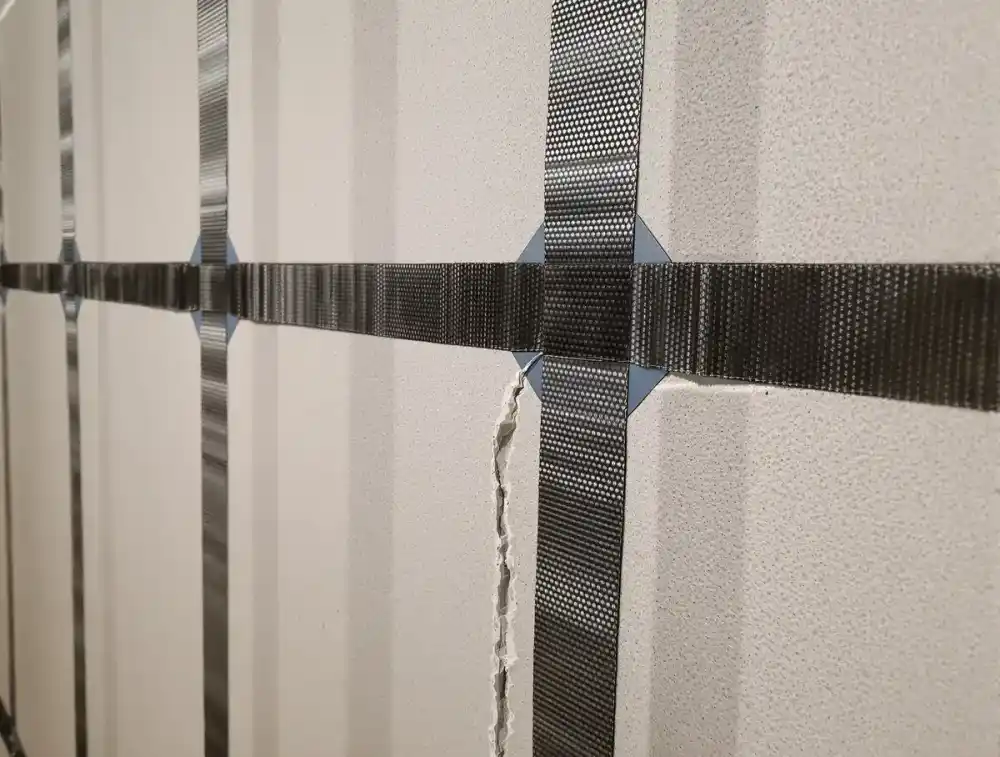
Carbon Fiber Straps
For early-stage bowing with less than 2 inches of inward displacement. High-tensile carbon fiber strips bonded to the wall surface with structural epoxy. Prevents further movement but does not push the wall back. Lowest cost, lowest disruption, but only appropriate for minor displacement.
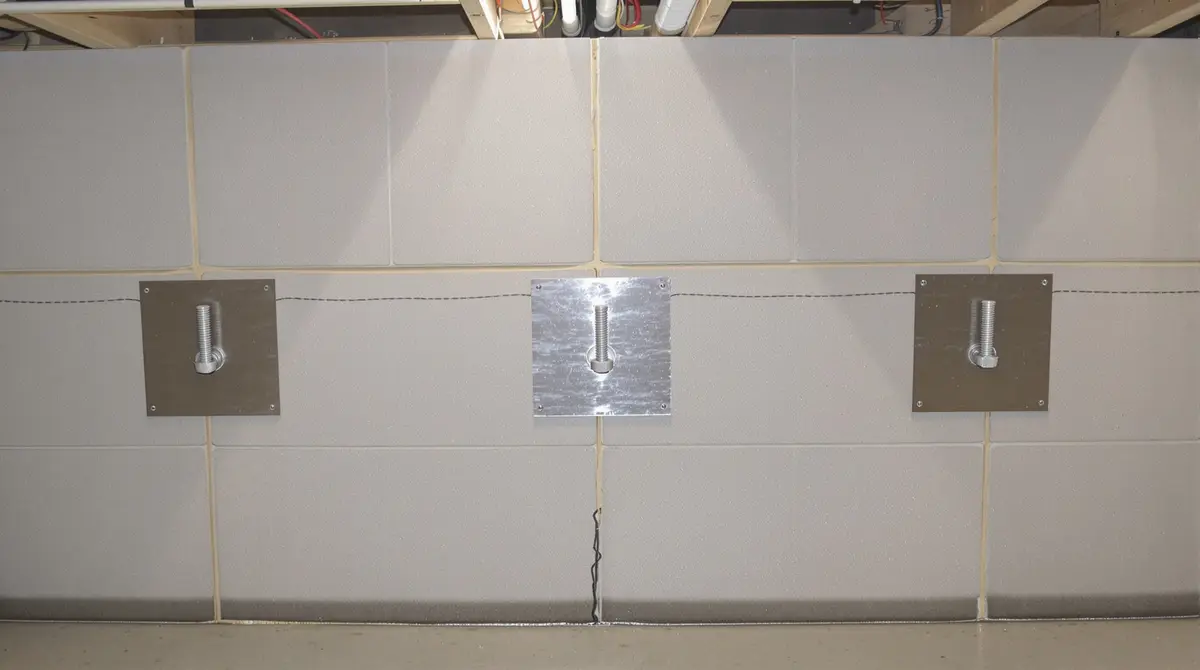
Wall Anchors
For moderate bowing where wall displacement exceeds what carbon fiber can address. Steel rods connect the basement wall to anchor plates buried in stable soil 10-15 feet away. Can stabilize and, with periodic tightening over time, gradually straighten the wall.
When displacement exceeds 4 inches, stabilization may no longer be sufficient. Walls that have moved this far have often sustained internal structural damage — cracked block cores, fractured mortar bonds, or spalled concrete — that compromises the wall's ability to carry vertical load even if lateral movement is stopped. Foundation wall replacement becomes the appropriate option at that point.
How Do You Lift a Sinking Concrete Slab?
Slab lifting addresses settled concrete surfaces — driveways, sidewalks, garage floors, patios — by filling the void beneath the slab and raising it back to level. The concrete itself is usually sound; the problem is the soil underneath it. Polyjacking injects expanding polyurethane foam through small holes drilled in the slab surface. The foam fills the void, expands to lift the slab, then cures to a rigid, lightweight support layer.
Polyjacking (Polyurethane Foam Injection)
Lightweight, water-resistant, and fast-curing. Foam reaches 90% strength within 15 minutes. Weighs 2-4 pounds per cubic foot (versus 100+ for mudjacking slurry), so it does not add significant load to already-compromised soil. Best for intact slabs that have settled due to fill soil compaction or subgrade erosion.
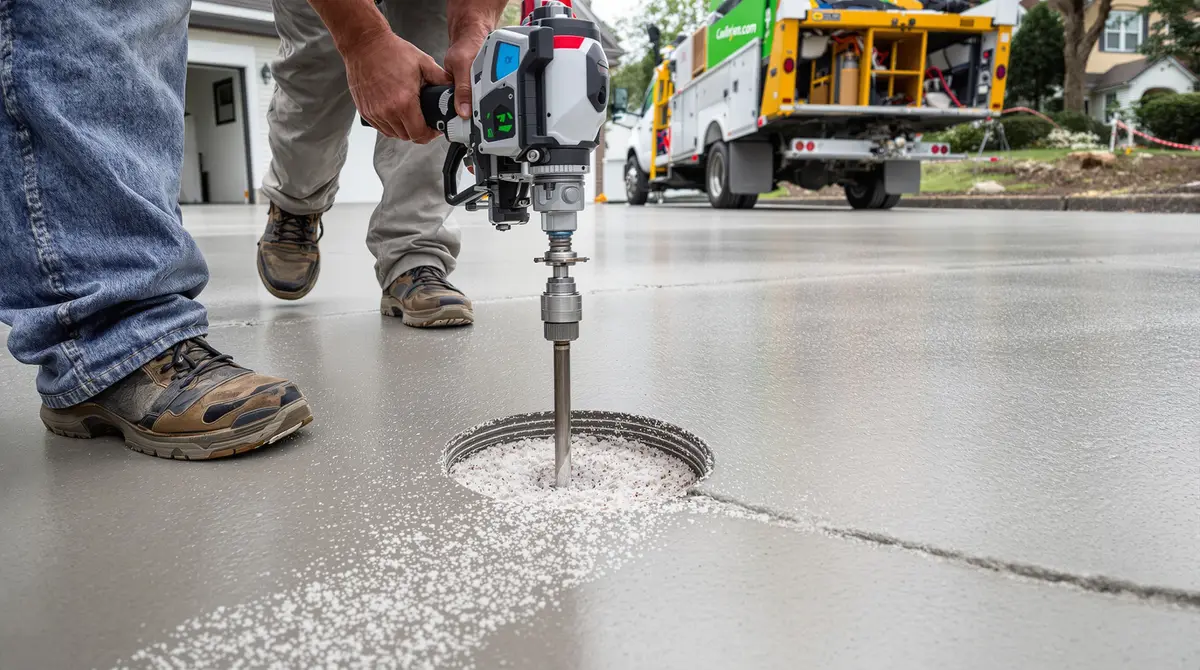
Heard of mudjacking? Read the polyjacking vs. mudjacking comparison to understand the differences in materials, weight, longevity, and cost.
When Is Crack Injection the Right Repair?
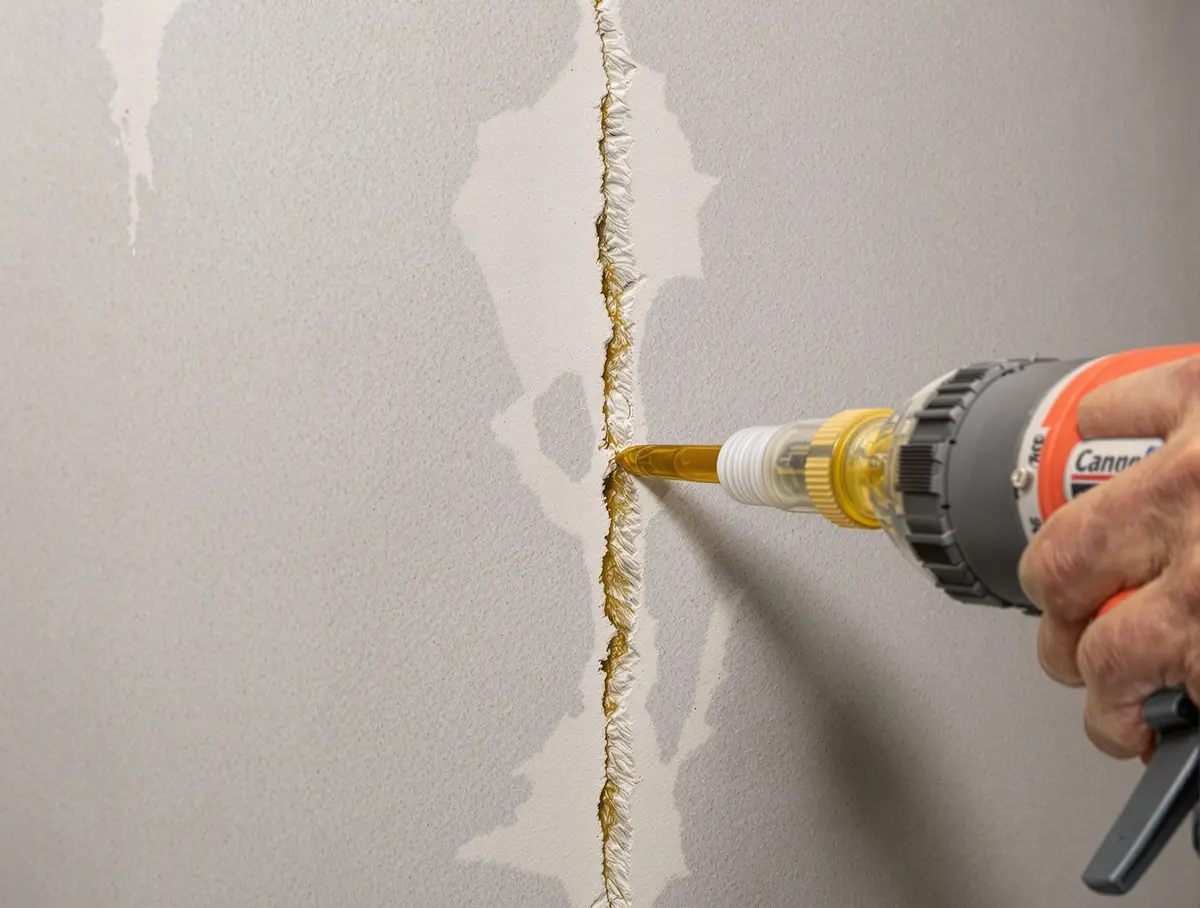
Crack injection seals non-structural cracks in poured concrete walls by filling the crack with epoxy (for structural bonding) or polyurethane (for flexible waterproof sealing). It is the lowest-cost foundation repair and also the most limited in scope. Crack injection works for hairline to moderate cracks that are not actively widening and show no lateral displacement. If a crack is growing, stair-stepping through mortar joints, or accompanied by wall movement, injection treats the symptom but not the structural cause. See the crack types guide to determine whether your crack is structural or cosmetic.
Epoxy and Polyurethane Crack Injection
Two materials, two purposes. Epoxy bonds the crack faces together for structural strength restoration. Polyurethane expands and remains flexible for waterproof sealing where minor seasonal movement is expected. The choice depends on whether the goal is structural repair or water control.
What Do These Repairs Cost?
Foundation repair costs vary by method, project scope, soil depth, and site access conditions. All pricing data — per-unit costs, typical project totals, cost factors, insurance information, and financing options — is maintained on the cost and economics page. Individual method pages link there for pricing context rather than restating figures, so the data stays current and consistent across the site.