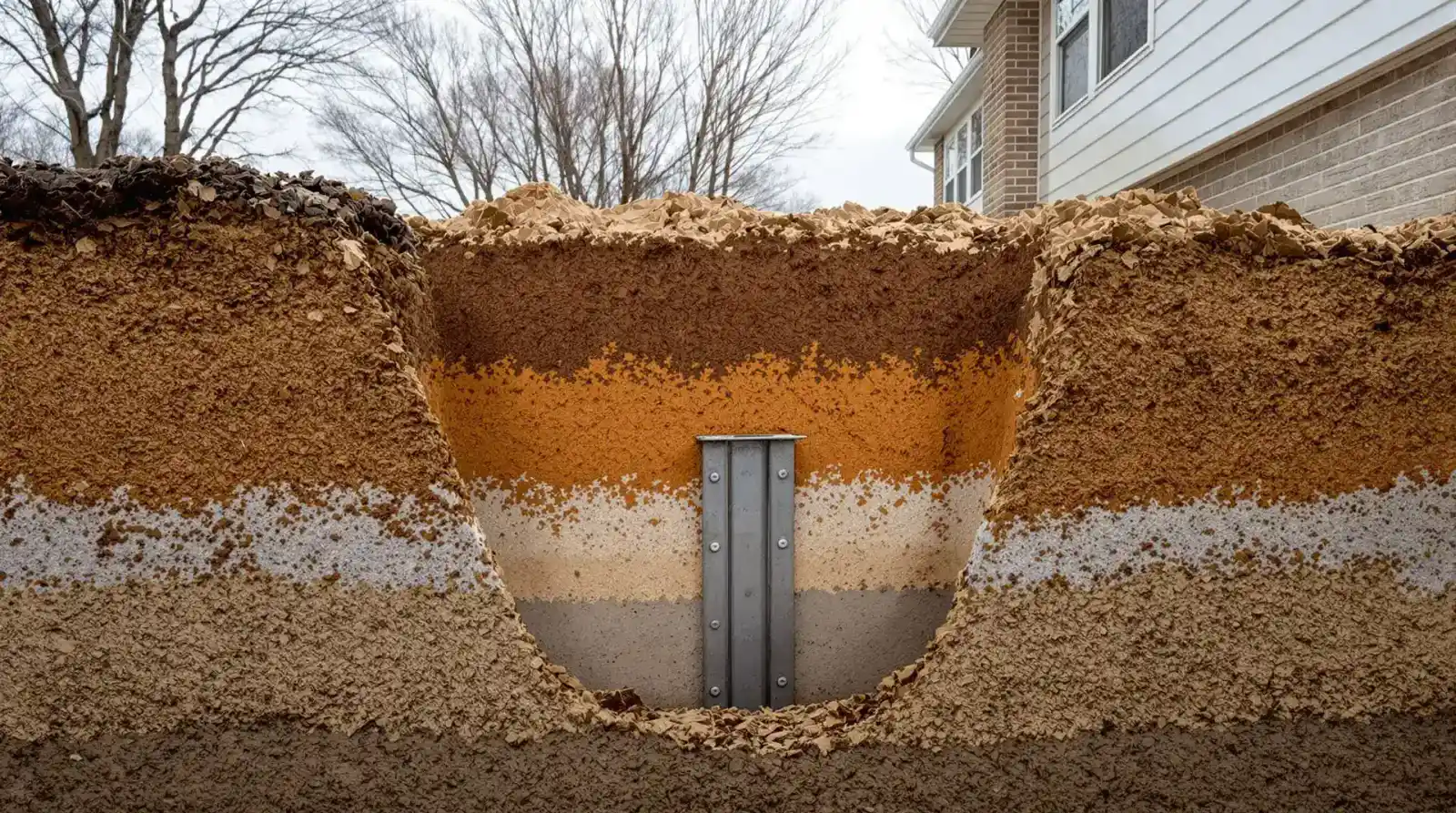
Understanding Foundation Problems in the Midwest
Free educational resource covering foundation science, soil mechanics, structural settlement, repair methods, and local risk data for Kansas City and Des Moines homeowners.
Foundation Integrity Authority is a free educational resource that explains why Midwest foundations fail and how repairs actually work. We cover soil science, structural symptoms, every major repair method, real cost data, and local risk profiles for Kansas City and Des Moines — so you can understand your situation before you ever talk to a contractor.
Your Learning Journey
Foundation Integrity Authority covers the complete journey from soil behavior to structural repair. Every section is written by an engineer, backed by USDA soil data and local market research, and designed to help you understand what's happening beneath your home before you talk to any contractor.
Foundation Science
How clay soil, water pressure, and freeze-thaw cycles create the forces that move Midwest homes.
The Complete Guide
The full problem-to-repair journey in one place. Start here if you're not sure what's wrong with your foundation.
Symptom Reference
Crack types, sloping floors, sticking doors, chimney separation — what each symptom means and how serious it is.
Repair Methods
How push piers, helical piers, wall anchors, carbon fiber, polyjacking, and crack injection actually work.
Cost & Economics
Real cost ranges by method with Kansas City local pricing, insurance realities, and the financial impact of waiting.
Assessment Tools
Clay Risk Score by address and Structural Integrity Score quiz — free interactive assessments for your property.
Why Do Midwest Foundations Move?
The soil beneath Kansas City and Des Moines homes is in constant seasonal motion. In Kansas City, the Wymore-Ladoga soil complex contains 60 to 80 percent clay with a USDA "very high" shrink-swell rating — it expands when wet and contracts when dry, creating forces that crack and shift even well-built foundations.
Kansas City's clay soil follows a predictable annual cycle. Spring rainfall saturates the clay and triggers expansion. Summer drought reverses the process. Winter freeze-thaw adds another layer of movement. The result: progressive foundation settlement that worsens with each passing year.
Read the full foundation science explanation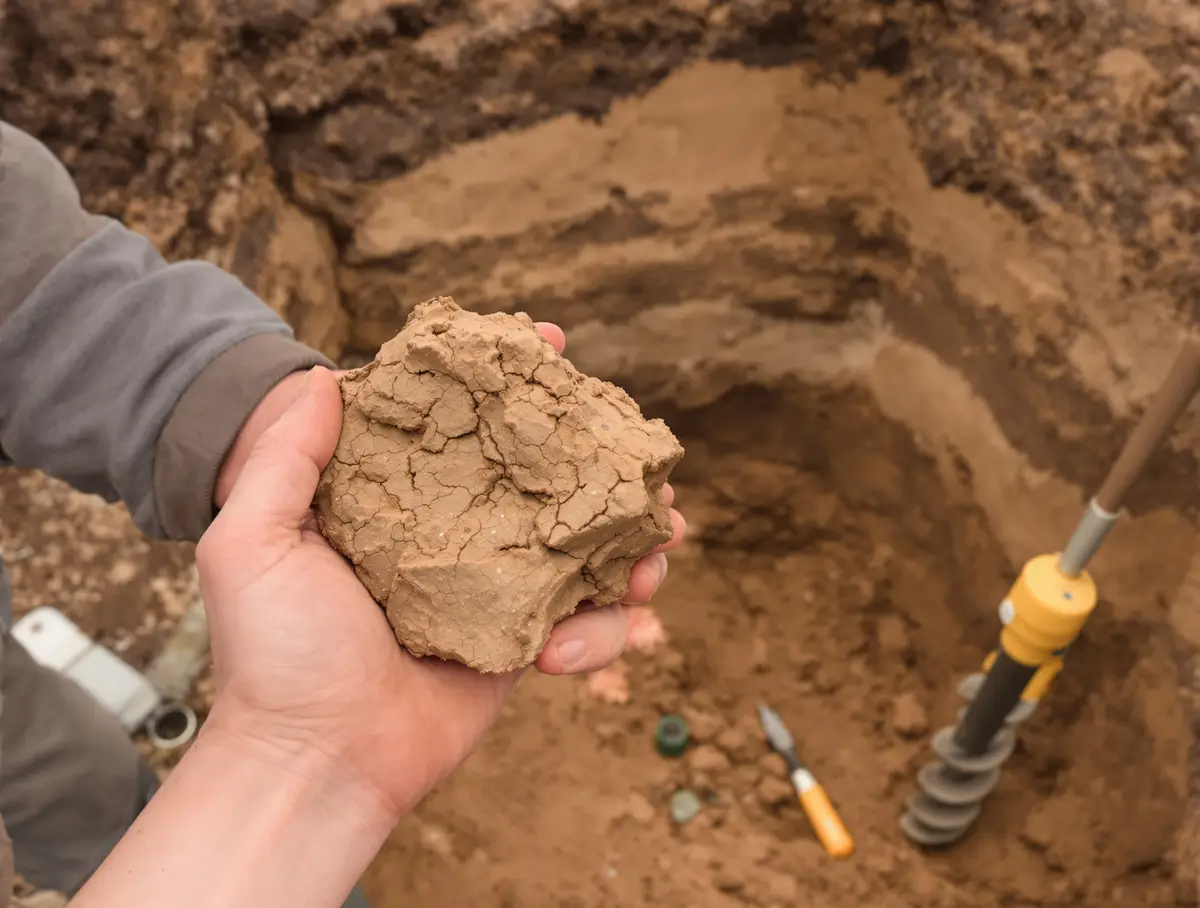
Test What You've Learned
Based on what you just read, which soil type poses the greatest shrink-swell risk to foundations?
What Are the Most Common Foundation Problem Symptoms?
Foundation problems announce themselves through visible symptoms throughout your home. Cracks, sloping floors, sticking doors, and chimney separation each reveal different information about what's moving and how fast.
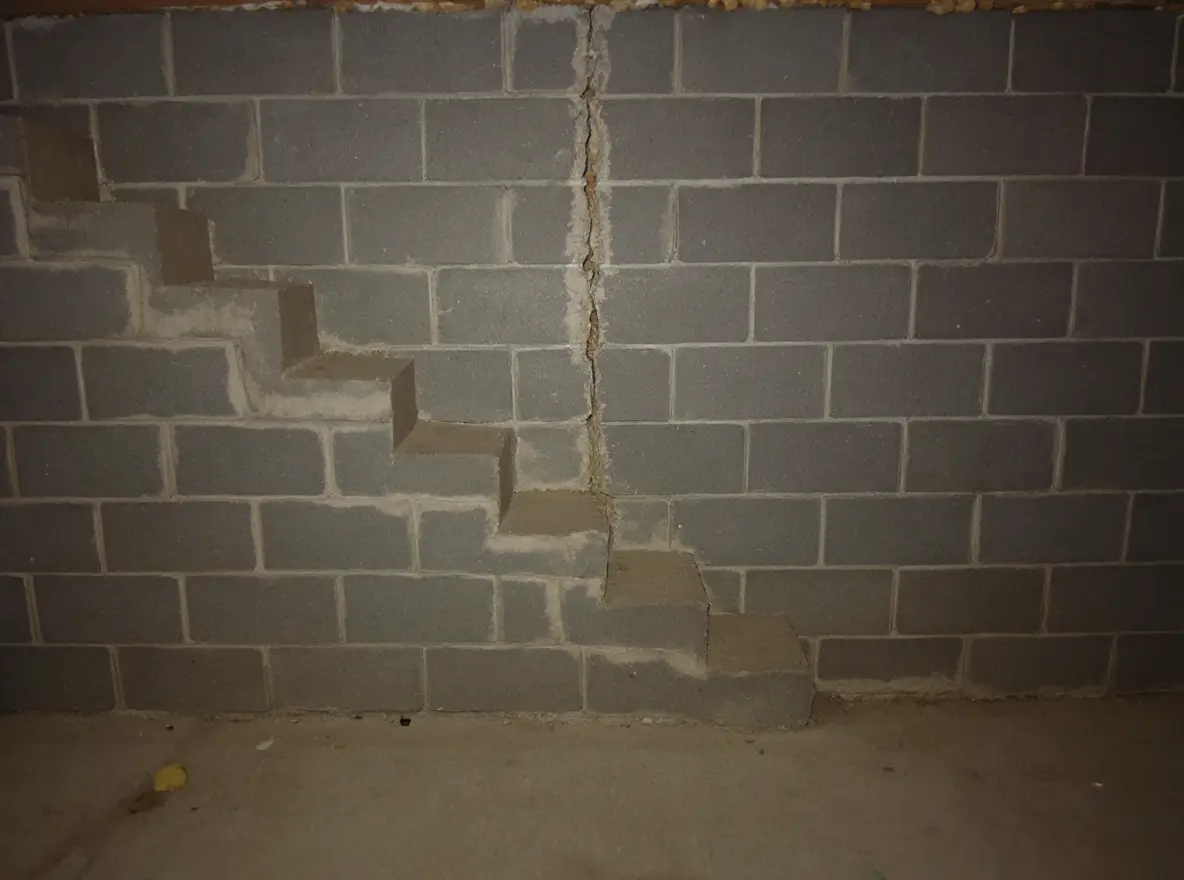
Foundation Cracks
VariesStair-step, horizontal, vertical, diagonal — each pattern tells a different story
Sloping Floors
Moderate–HighSettlement-driven slope vs. framing issues
Sticking Doors & Windows
ModerateFrame distortion from foundation movement
Chimney Separation
HighIndependent foundations settling at different rates
Garage Floor Sinking
ModerateSlab settlement from soil washout or compaction
How Are Foundation Problems Repaired?
Different failure modes require different repair systems. Settlement from soil compression requires piering. Bowing walls from lateral pressure require anchors or reinforcement. Sinking slabs require foam injection.
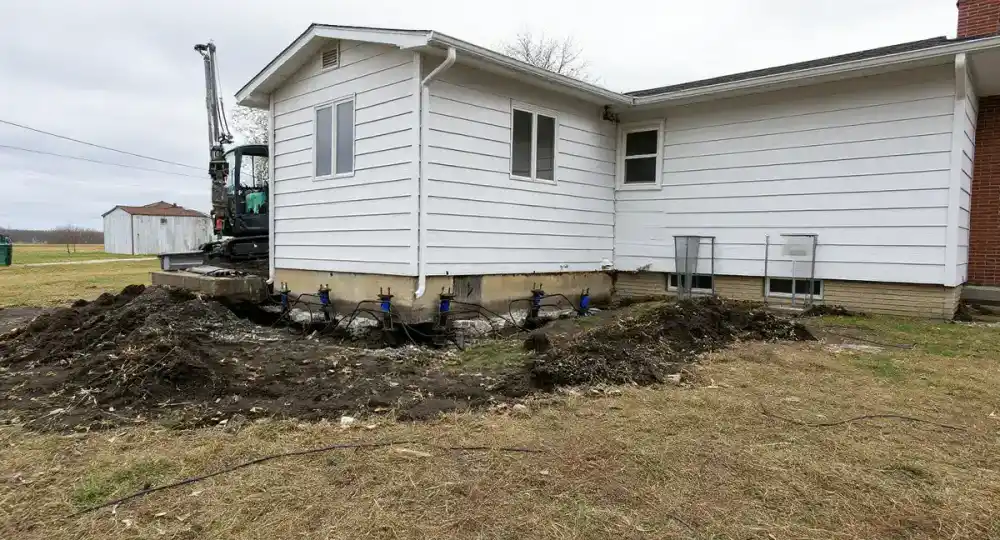
Push Piers
Steel tubes driven to bedrock using the home's weight
Helical Piers
Screw-in shafts for lighter structures and new construction
Slab Piers
Interior piers installed through the slab to stabilize settling floors
Helical vs. Push Piers
Side-by-side comparison of the two primary pier systems
Wall Anchors
Earth anchors counteracting lateral soil pressure on bowing walls
Carbon Fiber Straps
High-tensile reinforcement bonded to wall surfaces to arrest bowing
Foundation Wall Replacement
Full structural rebuild when walls are beyond reinforcement
Polyjacking
Polyurethane foam injection to lift sunken concrete slabs
Polyjacking vs. Mudjacking
Modern foam injection compared to traditional mud slurry lifting
Crack Injection
Epoxy or polyurethane injection to seal and waterproof foundation cracks
Kansas City vs. Des Moines: Different Soil, Different Problems
Same region, fundamentally different soil mechanics. Understanding which mechanism affects your home is the starting point for any response.
Kansas City
Shrink-swell cycling in Wymore-Ladoga clay drives progressive settlement. Spring saturation expands soil; summer drought contracts it. Limestone bedrock at 15-25 feet makes push piers highly effective.
Des Moines
Glacial till from the Des Moines Lobe creates persistent hydrostatic pressure against basement walls year-round. Deeper bearing strata mean longer pier installations and different cost profiles.
- Kansas City foundations primarily fail from shrink-swell cycling in high-clay Wymore-Ladoga soil.
- Des Moines foundations primarily fail from hydrostatic pressure generated by deep glacial till deposits.
- Bedrock depth differs dramatically: 15-25 feet in KC vs. 45-60+ feet in Des Moines, affecting pier length and cost.
- Identifying which failure mechanism affects your home is the first step toward understanding the right repair approach.
Ready for a Professional Assessment?
Request a free, no-obligation foundation evaluation. A specialist will contact you within one business day.